Choosing running gear today can feel overwhelming. New shoes, watches, belts, and compression gadgets launch every month, each promising to make you faster, lighter, and more “elite.” But the truth is simple: the best running gear is the gear that matches your actual running needs, not marketing hype. This guide will help you cut through buzzwords and influencer trends so you can build a smart, minimal running kit that supports your training, protects your body, and fits your budget.
- Why Marketing Is Not Your Running Coach
- Start With Your Running Profile (Not the Gear)
- Core Principles of Choosing Running Gear
- Running Shoes: How to Choose What You Actually Need
- Clothing and Layers for Different Conditions
- Hydration Gear: Belts, Bottles, and Packs
- Safety and Visibility: Essentials, Not Extras
- Comfort and Injury Prevention: Accessories That Matter
- Wearables, Watches, and Tech: How Much Is Too Much?
- Seasonal Gear: What Changes, What Stays the Same
- Common Marketing Traps and How to Avoid Them
- How to Build a Minimalist but Complete Running Kit
- When to Upgrade Gear: Signs It’s Time to Replace
- Example Gear Setups for Different Runners
- Final Checklist: Are You Buying for Needs or Marketing?

Why Marketing Is Not Your Running Coach
Running brands survive by selling more products, not fewer. That means you are constantly told you “need”:
- Multiple pairs of shoes for every type of run
- Compression everything
- Smart devices to track every heartbeat and step
- New “must-have” fabrics and technologies each season
But performance gains from gear are usually small, while gains from consistent training, sleep, and smart recovery are huge. Learning to choose running gear that adds value without complexity helps you focus on what matters: your training and enjoyment. For a deeper look at this philosophy, see Running Gear That Adds Value Without Complexity.
Start With Your Running Profile (Not the Gear)
Before looking at products, define your running profile. Gear should answer your profile—not the other way around.
Key questions to clarify your needs
- Experience level: Are you a beginner, returning runner, or experienced?
-
Primary goal:
- General fitness / weight loss
- Racing (5K, 10K, half, marathon)
- Trail running / hiking hybrid
- Stress relief / mental health
-
Typical distance:
- Short runs (20–40 min)
- Moderate (5–10 km)
- Long (10 km+ or 60+ min)
- Surface: Road, treadmill, trail, mixed?
- Climate: Hot, humid, cold, wet, or highly variable?
- Body considerations: Injury history, chafing issues, blisters, or joint pain?
Answering these questions shows you what problems you need gear to solve: comfort, safety, hydration, weather, or support.
Core Principles of Choosing Running Gear
Use these principles as a filter before buying anything:
- Function before fashion Does this solve a real problem you already have (chafing, no pockets, night safety), or is it a “nice to have” you saw on social media?
-
Evidence before claims
Look for:
- Independent reviews, not just sponsored posts
- Honest pros and cons, not just “game changing” language
- Simple, clear descriptions of what the product actually does
- Comfort is performance If it rubs, pinches, bounces, or distracts you, it’s not helping, no matter how “advanced” it is.
- Buy for 90% of your runs Don’t buy shoes for a hypothetical ultramarathon if you mostly run 5 km. Gear should optimize what you actually do most.
- Start minimal, add only when needed Build a small, reliable kit over time. You don’t need a full drawer of specialized gear to get strong and consistent.
Running Shoes: How to Choose What You Actually Need
Shoes are your most important gear decision. But you still don’t need the most expensive or flashy pair.
Step 1: Define your shoe priorities
- Comfort: No hot spots, pinching, or crushing of toes
- Fit: About a thumb’s width of space at the front; secure heel
- Purpose: Daily training, racing, trails, or mixed surfaces
- Injury history: Knee pain, shin splints, plantar fasciitis, etc.
Step 2: Ignore marketing buzzwords
Be cautious of phrases like:
- “Energy return” and “super foam”
- “Carbon plate = automatic PR”
- “Stability for everyone”
These can be useful features but only if they match your needs. A carbon-plated racing shoe is overkill if you run 3 times per week at an easy pace.
Step 3: Look for these practical features
-
Cushioning:
- Light to moderate: Good for shorter, faster runs.
- Moderate to high: Helpful for longer runs or heavier runners.
-
Drop (heel-to-toe difference):
- 6–10 mm works for most runners.
- Very low drop (<4 mm) may require adaptation.
- Upper fit and breathability for your climate.
- Durability: Most trainers last ~500–800 km depending on your weight, surface, and form.
Step 4: Try, test, adjust
- Try shoes in the evening when your feet are slightly swollen.
- Walk and jog in them if the store allows.
- Notice any immediate rubbing or pressure—these usually get worse, not better.
Clothing and Layers for Different Conditions
Good running clothing doesn’t need to be expensive, but it should be functional.
Base rules for running clothing
- Avoid cotton for longer or sweaty runs—it holds moisture and causes chafing.
- Choose technical fabrics or blends that wick sweat and dry quickly.
- Prioritize fit and seam placement to reduce rubbing.
Warm and hot weather
- Lightweight, breathable tops
- Shorts or light leggings with pockets (for keys, phone, gels)
- Cap or visor for sun protection
- Light, moisture-wicking socks
If you regularly run in heat, it’s worth exploring targeted gear suggestions like those in Best Running Accessories for Hot Weather Running.
Cold weather
- Base layer: Moisture-wicking (not cotton)
- Mid-layer: Light fleece or long-sleeve
- Outer layer: Wind-resistant or waterproof (depending on conditions)
- Hat or headband plus lightweight gloves
Remember: dress as if it’s about 10°C (18°F) warmer than the thermometer reading, because you’ll heat up as you run.
Chafing protection
If you’re prone to chafing (thighs, underarms, sports bra line), a targeted product such as the Vorlich Anti-Chafe Stick can prevent painful skin irritation, especially during longer runs or in humid conditions.
Hydration Gear: Belts, Bottles, and Packs
Hydration needs depend on distance, pace, climate, and access to water fountains.
When you actually need hydration gear
- Runs longer than ~45–60 minutes (shorter in hot weather)
- Routes without reliable water sources
- Trail runs or races where aid stations are far apart
Common hydration options
- Handheld bottles – simple, but can change your arm swing.
- Belts with bottles – balance weight at hips; great for road and tempo runs.
- Hydration vests/packs – best for long trail runs and ultras.
Compact and flexible gear, like the Vorlich Folding Bottle, can be useful if you want hydration without carrying a rigid bottle for the whole run.
If you prefer carrying your phone, keys, and gels around the waist, learn how to avoid bounce and discomfort in this guide: How to Choose the Right Running Belt for Your Training.
Safety and Visibility: Essentials, Not Extras
Safety gear is often framed as optional, but for many runners it’s non-negotiable.

Core safety items
- High-visibility elements: Reflective details on clothing, belt, or vest
-
Lights:
- Front-facing light to see the road/trail
- Rear red light so cars and cyclists see you
- ID and contact info: ID bracelet or card in a pocket
- Phone for emergencies (in a secure, non-bouncing pocket or belt)
Running in dark winter mornings or evenings? Emphasize visibility and warmth; tactics for staying consistent in those seasons are discussed in resources like How to Stay Motivated to Run During Dark Winter Mornings.
Comfort and Injury Prevention: Accessories That Matter
Many accessories are “nice, but not necessary.” A few, however, can significantly improve comfort and reduce injury risk when matched to your needs.
Worth-considering accessories
-
Technical socks:
- Reduce blisters compared with basic cotton socks.
- Look for seamless toes and breathable panels.
- Anti-chafe products (sticks, balms, creams)
-
Running-specific underwear and sports bras:
- Better support and moisture management.
- Fewer seams in high-friction areas.
-
Sun protection:
- Cap or visor
- Running sunglasses
- Sunscreen for exposed skin
What to question before buying
- Compression sleeves or socks “for performance” – may help some people with recovery, but they are not magic.
- “Posture corrector” gear – better posture comes from strength and technique, not straps.
- Very specialized items you only use in rare situations.
Wearables, Watches, and Tech: How Much Is Too Much?
Running tech can help you train smarter, but it’s easy to overbuy.
Do you actually need a GPS watch?
You may benefit from one if you:
- Care about pacing and distance tracking outdoors
- Follow structured workouts (intervals, tempo runs)
- Like reviewing training data trends
But if you’re just starting with easy runs a few times a week, a simple app on your phone is usually enough. Later, as you progress to more structured training plans—like a dedicated 10K plan—you may find advanced metrics more useful. See related training discussions such as How to Train for a 10K Without Burning Out for context on when data can support better workouts.
What features matter most?
- Accurate GPS
- Comfortable strap and size
- Easy-to-read screen while moving
- Battery life that covers your longest runs plus a margin
Heart rate, running dynamics, and other advanced stats are optional extras. Buy for what you’ll use weekly, not what sounds “cool.”
Seasonal Gear: What Changes, What Stays the Same
Your core needs—comfort, safety, hydration—stay constant, but how you meet them changes with the season.
Summer / hot weather
- Prioritize breathability and sun protection.
- Shorts and light tops; avoid heavy materials.
- Hydration moves from “optional” to “essential” on many runs.
Winter / cold weather
- Use a layering system: base, mid, outer.
- Protect extremities: hands, ears, face.
- Visibility becomes critical with shorter daylight.
Rainy or windy conditions
- Water-resistant or windproof shells can make a big difference in comfort.
- Accept that you might get wet; avoid over-layering and overheating.
Common Marketing Traps and How to Avoid Them
Recognizing marketing tactics makes it easier to walk away from gear you don’t need.
Trap 1: “This gear will make you faster”
- Reality: Training structure, consistency, sleep, and nutrition make you faster.
- Gear can save seconds; training can save minutes.
Trap 2: “Everyone is wearing this shoe/watch/short”
- Sponsored athletes and influencers are paid or supplied to wear gear.
- Their body, goals, and mileage are usually very different from yours.
Trap 3: “Limited edition” or “drops”
- Artificial scarcity encourages impulse buys.
- Ask: Would I buy this exact item if it were a regular product, without hype?
Trap 4: Over-complicated features
- Multiple pockets, zippers, straps that you don’t need add weight and complexity.
- More features = more things that can break or be uncomfortable.
How to Build a Minimalist but Complete Running Kit
Instead of buying everything at once, build your kit logically over time.
Phase 1: Absolute basics
- 1 good pair of running shoes
- 2–3 technical shirts
- 2–3 pairs of running shorts or tights
- 3–5 pairs of running socks
- Sports bra(s) with proper support (if needed)
Phase 2: Comfort and safety upgrades
- Anti-chafe product for longer runs
- Cap/visor and light gloves depending on your climate
- Basic reflective vest or light for low-light runs
Phase 3: Distance and performance upgrades
- Hydration solution (belt, bottle, or vest)
- GPS watch if you consistently train outdoors and follow workouts
- Weather-specific layers (rain jacket, thermal tops, etc.)
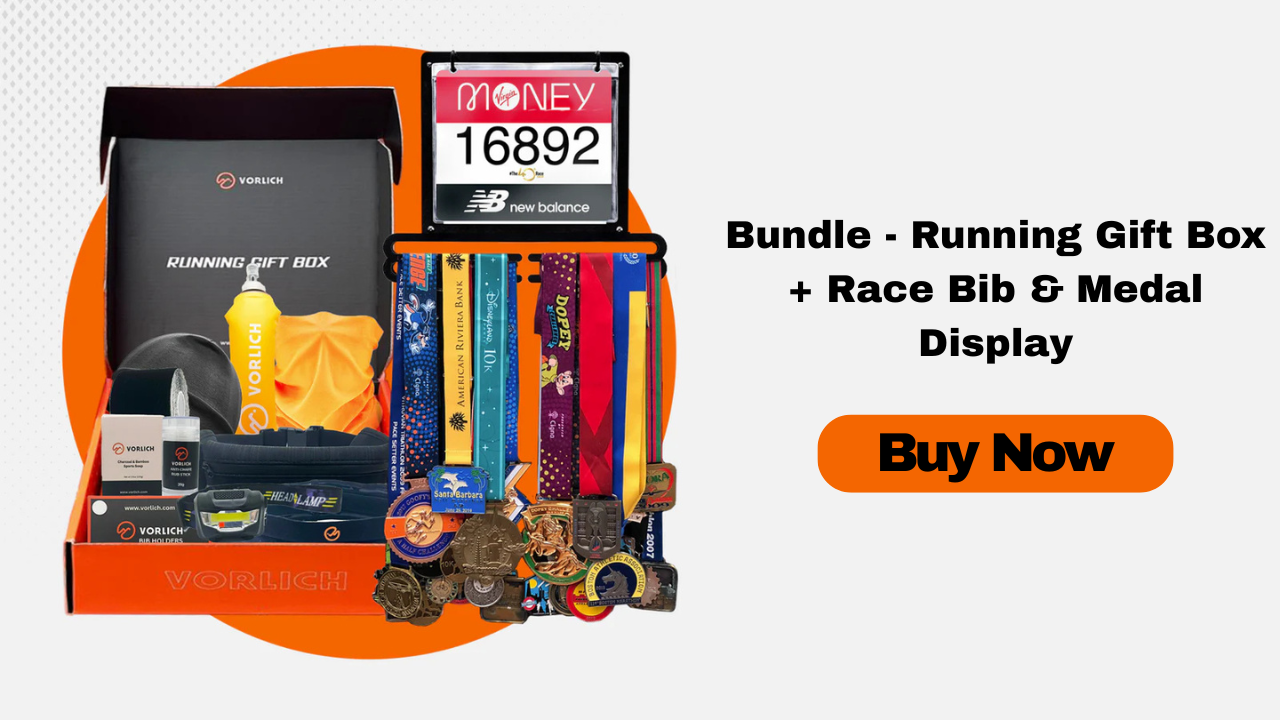
If you’re buying for a runner (or for yourself as a structured starter kit), a curated bundle such as the Vorlich Running Gift Box can be a convenient way to get essentials without chasing every individual accessory.
When to Upgrade Gear: Signs It’s Time to Replace
Upgrading should be based on worn-out gear or new needs, not boredom.
When to replace shoes
- Visible wear on outsole (smooth patches, deep creasing)
- New aches or pains during or after runs
- Midsole feels “flat” or dead compared with new shoes
When to replace clothing
- Fabric thinning, holes, or broken seams
- Persistent odor or loss of wicking ability
- Elastic completely stretched out
When to upgrade tech
- Your training outgrows your watch’s capabilities (e.g., you now follow structured interval plans and need better workout features).
- Battery no longer lasts through typical runs.
Example Gear Setups for Different Runners
1. New runner focused on health and weight loss
Goals: 2–4 runs per week, building habit and fitness.
- Comfortable, neutral running shoes
- Basic technical tops and shorts/tights
- Running socks and anti-chafe for problem areas
- Phone app for tracking
A structured routine matters far more than advanced gear. If that’s your focus, you might enjoy plans like those in Beginner Running Plan for Weight Loss and Fitness, which work using simple gear.
2. 10K or half-marathon trainee
Goals: 3–5 runs per week, mix of easy, long, and speed sessions.
- Daily trainer shoes + (optional) lighter shoe for speed days
- Technical clothing for all main weather conditions you face
- Hydration solution for long runs (belt, folding bottle, or vest)
- Anti-chafe product and technical socks
- GPS watch or reliable tracking method
3. Trail or mixed-surface runner
- Trail shoes with grip and protection
- Hydration vest or reliable bottle system
- Light jacket for wind/rain
- Safety whistle, phone, and ID
Final Checklist: Are You Buying for Needs or Marketing?
Before you buy any running gear, run through this quick checklist:
- What problem does this solve? Is it a problem you actually have on runs, or just something you read about?
- How often will I use it? At least once a week? Or only on rare special occasions?
- Have I read unbiased reviews? Look for feedback that mentions durability, comfort, and fit issues.
- Does it align with my current running goals and level? Or is it suited for a type of training I’m not doing yet?
- Is there a simpler option? Could a more basic (and cheaper) item meet the same need?
When you choose gear based on your real running needs—not on trends—you save money, avoid clutter, and build a setup that quietly supports every run. That’s how gear becomes a tool, not a distraction, and how you keep the focus where it belongs: on getting out the door, putting in the miles, and enjoying the process.