If you’re just starting to run – or you’re an improver trying to get more consistent – it’s easy to feel overwhelmed by the amount of running gear out there. The good news is that you do not need a huge budget or a closet full of gadgets to become a stronger, happier runner. With a smart, minimal running gear setup, you can stay comfortable, avoid injuries, and focus on what really matters: building a sustainable running habit.
Why a Minimal Running Gear Setup Matters
A minimal running gear setup is about buying less, but buying smarter. Instead of collecting every new gadget, you focus on a few high-impact items that improve your comfort and consistency.
For beginners and improvers, a stripped-back setup offers several advantages:
- Less decision fatigue: You always know what to wear and what to grab – which makes it easier to get out the door.
- Lower cost: You invest in versatile essentials rather than duplicate or niche items.
- Better focus: With fewer distractions, you can concentrate on form, breathing, and building endurance.
- Easier progress tracking: You avoid overcomplicating training with too much data.
If you’re not sure how to structure your training alongside this minimal gear approach, pairing your kit with a simple plan such as a Beginner Running Plan That Builds Confidence can help you progress steadily without extra complexity.
The Core Minimal Running Kit: What You Actually Need
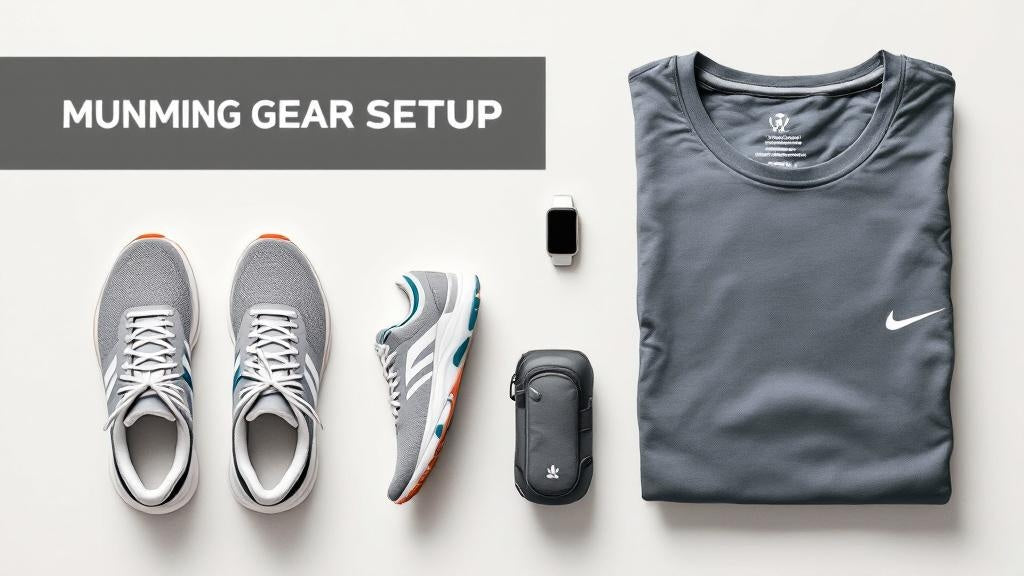
At its simplest, a functional running setup for beginners and improvers comes down to just a handful of items. These are the non‑negotiables that bring the most benefit for comfort, injury prevention, and performance.
Absolute Essentials (Start Here)
- Running shoes that suit your feet and training volume.
- Moisture-wicking socks to reduce blisters and discomfort.
- Technical top (T‑shirt or long sleeve, depending on climate).
- Running shorts or tights with a secure waistband.
- Sports bra with adequate support (for women).
Highly Recommended for Comfort and Safety
- Lightweight hat or headband (for sun or cold).
- Reflective element (vest, armband, or details on clothing).
- Simple hydration option (handheld bottle or small belt).
- Anti-chafe product for longer or hotter runs.
Once you have these basics in place, you can start thinking about incremental upgrades like layering, better visibility, or light tech. For a broader overview of useful but non‑overwhelming equipment, you can explore Running Gear Essentials for Everyday Running and then decide what actually fits your routine.
How to Choose the Right Running Shoes (Without Overthinking It)
Running shoes are usually the single most important investment in your minimal kit. The wrong pair can cause blisters, knee pain, or shin splints; the right pair can make every run feel smoother.
Key Principles for Minimalist Shoe Buying
- Fit before brand: A perfect fit from a lesser-known brand is better than an ill-fitting “popular” shoe.
- Comfort from day one: They should feel good immediately; don’t rely on a “break‑in” period.
- Purpose over hype: Daily trainers are ideal for beginners and improvers – avoid ultra-racing or highly specialized models at first.
What to Look For
- Toe box: Your toes should be able to splay; aim for about a thumbnail’s width between your longest toe and the shoe’s end.
- Cushioning: Enough to feel protective, but not so soft that you feel unstable.
- Heel and midfoot lockdown: Your heel should not slip; the midfoot should feel snug, not squeezed.
- Flexibility: The shoe should bend near the ball of your foot, not in the middle of the arch.
When to Replace Them
Even in a minimal setup, you shouldn’t stretch shoes far past their lifespan:
- Every 500–800 km (300–500 miles), depending on build and your running style.
- Sooner if you notice:
- New aches in knees, hips, or shins.
- Outsole worn flat in your main landing areas.
- Midsole feeling flat or “dead.”
Minimal Running Clothing and Layering Strategy
Running clothing doesn’t need to be complicated. Focus on breathable, moisture‑wicking fabrics that help regulate temperature and reduce chafing.
Year‑Round Minimal Clothing List
- 2–3 technical T‑shirts or long sleeves.
- 1–2 pairs of running shorts.
- 1–2 pairs of running tights/leggings (for colder conditions).
- 3–5 pairs of running socks (synthetic or merino; avoid cotton).
- 1 lightweight, packable running jacket (windproof and ideally water‑resistant).
- 1–2 sports bras (for women), designed specifically for high‑impact activity.
- Simple running cap or beanie, depending on your climate.
Layering Made Simple
To keep your setup minimal but versatile, use a basic layering strategy:
- Base layer: A moisture‑wicking top close to your skin.
- Insulating layer (cooler weather): A long-sleeve or light mid‑layer if needed.
- Outer layer (wind/rain): Thin jacket that blocks wind and light rain without trapping heat.
Remember: you should feel slightly cool when you start your run. Overdressing is a common mistake that leads to overheating and carrying unnecessary weight.
Hydration and Simple On-the-Run Nutrition
Proper hydration is essential for both beginners and improvers, especially as you tackle longer distances or warmer weather. That doesn’t mean you need a full hydration vest from day one; a minimal approach can work very well.
Hydration Basics
- For runs up to 45–60 minutes in moderate weather, many runners can manage without carrying water, as long as they start well-hydrated.
- For longer runs, hotter climates, or those prone to dehydration, carrying water becomes more important.
Minimal Hydration Options
- Handheld bottle: Simple, lightweight, and great for most runs.
- Belt with small flasks: Keeps hands free while avoiding a bulky pack.
- Folding/soft bottle: Saves space and weight as you drink.
A smart, minimal choice is something like the Vorlich Folding Bottle, which lets you stay hydrated without carrying a rigid, bulky bottle once it’s empty.
On-the-Run Fuel (When You Actually Need It)
For beginners sticking to shorter distances, you rarely need sports gels or complex fueling strategies. However, once your runs last longer than about 75–90 minutes, some simple carbohydrates can help maintain energy and prevent the “crash.”
Options include:
- Sports gels.
- Chews or blocks.
- Simple snacks like dates or a banana beforehand.
If you move toward half or full marathon training, your nutrition strategy becomes more important. For a deeper dive into fueling during higher‑volume training, see What Runners Should Eat During Marathon Training to understand how to support your runs while still keeping your gear and routine simple.
Preventing Chafing, Blisters, and Discomfort
Even with the best minimal setup, ignoring chafing and friction can turn a good run into a miserable one. The goal isn’t to collect products – it’s to have one reliable solution that you use proactively.
Blister Prevention Essentials
- Choose non‑cotton socks that wick moisture.
- Make sure shoes are the right size – too tight or too loose increases friction.
- Use a thin layer of anti‑chafe balm on common hot spots (back of heel, between toes, ball of foot) for longer or wet runs.
Chafing Prevention for Longer Runs
Common problem areas:
- Inner thighs.
- Underarms.
- Sports bra lines and band.
- Waistband area.
A simple, effective tool is a dedicated anti‑chafe stick. A product like the Vorlich Anti-Chafe Stick is small, easy to carry in your bag, and can dramatically improve comfort on both short and long runs.
Minimal Tech: Watches, Apps, and Tracking
You do not need an expensive GPS watch to be a “real” runner. Minimal tech can still give you the data you need for progress without overcomplicating things.

Basic Options for Tracking Runs
- Smartphone apps: Free apps track distance, pace, and routes; perfect for beginners.
- Basic GPS watch: Ideal if you want to leave your phone at home; look for simple models with distance, pace, and time.
- Time‑based running: For the ultimate minimal tech approach, use a simple digital watch or even a phone timer and run by time, not distance.
For many improvers, combining simple tracking with a structured plan – like an 8 Week 5K Plan You Can Follow Anywhere – gives enough guidance to improve pace and endurance while still keeping the setup low‑tech and stress‑free.
Safety and Visibility Essentials
Staying safe is part of a sensible minimal running kit. You don’t need a lot, but you should cover the basics, especially if you run early in the morning, in the evening, or in quieter areas.
Key Safety Items
- Reflective gear: A vest, belt, or reflective details on your clothing.
- ID or emergency contact info: A small card, wristband, or note in a pocket.
- Phone: For emergencies (and route tracking if you prefer).
- Headlamp or small clip‑on light: If you run in low light or unlit areas.
These items do not need to be expensive. The goal is to be visible and reachable if something goes wrong, while still keeping your setup light.
Budget Tips: Building a Minimalist Kit Without Overspending
A minimal kit is naturally budget‑friendly, but you can stretch your money further with a few smart strategies.
Where to Invest vs. Where to Save
Spend a bit more on:
- Running shoes (comfort and injury prevention).
- Sports bras (for women).
- High‑friction problem solvers (socks, anti‑chafe).
Save money on:
- Basic tops and shorts (mid-range technical fabrics work fine).
- Accessories (hats, gloves, simple belts).
- Color and style (focus on function, not trends).
Practical Budget Strategies
- Buy last season’s shoe models when they go on sale.
- Choose neutral colors that mix and match easily.
- Start with one set of quality gear and build up slowly as your running habit sticks.
If you want more ideas on stretching your budget while building a functional kit, this guide on How to Build a Minimal Running Kit Without Overspending breaks down where gear upgrades actually make sense and where they don’t.
Caring for Your Gear So It Lasts Longer
A minimal setup only works if your gear lasts. Simple care habits will extend the life of your shoes and clothing, saving money and reducing waste.
Shoe Care
- Rotate between at least two pairs if you run often; this lets the foam recover.
- Dry wet shoes at room temperature – avoid radiators and direct heat.
- Loosen laces and pull your shoes off by hand rather than stepping on the heel.
Clothing Care
- Wash technical gear in cool water with mild detergent.
- Avoid fabric softener, which can damage moisture‑wicking properties.
- Air dry when possible to preserve elasticity and fit.
Example Minimal Setups for Different Running Goals
Different running goals can use the same core gear with only minor tweaks. Here are a few examples.
1. Beginner: Couch to 5K
- 1 pair of comfortable daily‑trainer running shoes.
- 2 technical tops, 1–2 shorts, 1–2 tights (climate‑dependent).
- 3–5 pairs of running socks.
- Sports bra (if needed).
- Simple phone app for tracking time or distance.
- Basic reflective element (clip, band, or vest).
Combine this with a straightforward schedule like a Simple 5K Training Plan for Beginner Runners and you have everything you need to go from walking to confidently completing a 5K.
2. Improver: Chasing a Faster 5K or 10K
- 1–2 pairs of running shoes (daily trainer + slightly lighter shoe if desired).
- Layering options for different weather; 1 running jacket.
- Anti‑chafe stick for longer or faster sessions.
- Basic GPS watch or reliable app for pacing intervals.
- Handheld or folding bottle for warm‑weather tempo and long runs.
3. Long‑Term: Building Toward Longer Races
- At least 2 pairs of shoes for rotation.
- More socks to reduce laundry pressure and friction issues.
- Simple belt or vest for carrying fuel and hydration.
- Headlamp and more robust reflective gear if training in the dark.
Common Gear Mistakes Beginners and Improvers Make
A minimal setup helps you avoid many pitfalls, but a few common mistakes still crop up.
1. Overbuying Before You Start
Loading up on gear before you’ve built a habit can be demotivating and expensive. Instead:
- Start with the essentials.
- Run consistently for a few weeks.
- Then upgrade based on what you actually miss or struggle with.
2. Ignoring Comfort Signals
Blisters, rubbing, or persistent soreness are signals that something in your setup needs attention. Often, the fix is simple:
- Change socks or adjust shoe size.
- Add anti‑chafe for problem areas.
- Check that your waistband or sports bra isn’t too tight.
3. Assuming More Tech Means Better Results
Chasing data from multiple apps and devices can cause confusion. For most runners, especially in the early stages:
- One simple tracking tool is enough.
- Focus on consistency, not just numbers.
4. Forgetting Recovery Support
While foam rollers and massage guns aren’t essential, basic recovery habits are:
- Comfortable shoes for everyday wear.
- Gentle stretching and mobility work.
- Easy running days instead of constant hard efforts.
Final Thoughts: Start Simple, Upgrade Slowly
A minimal running gear setup for beginners and improvers comes down to a few high‑impact essentials: good shoes, moisture‑wicking clothing, simple hydration, and basic safety gear. With that, you’re ready to build endurance, speed, and confidence without clutter or unnecessary expense.
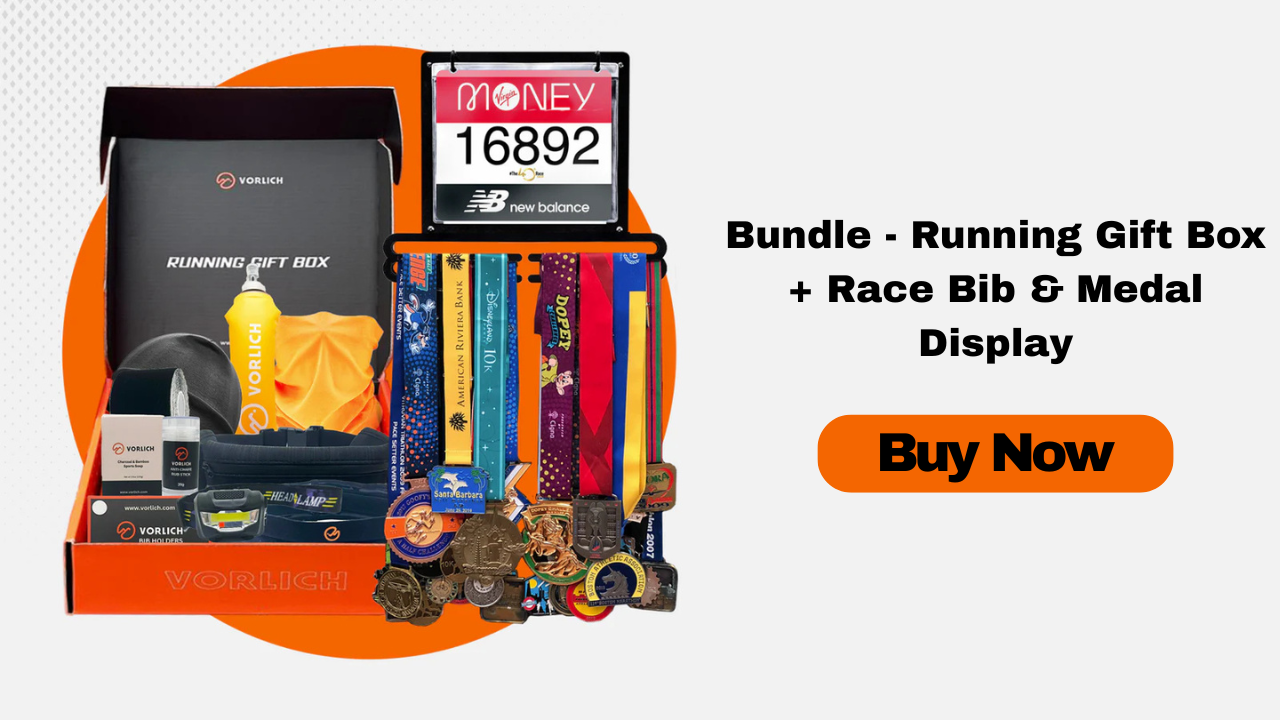
If you enjoy small rewards for your progress, something like the Vorlich Running Gift Box can be a motivating treat that still aligns with a useful, minimal philosophy – it bundles practical items you’ll actually use rather than adding random clutter.
Above all, remember that your gear is there to support a habit, not define it. Focus on consistency and small improvements, and consider pairing your minimalist setup with guidance like a 5K Training Plan for Improving Endurance as you get stronger. Start simple, listen to your body, and upgrade only when your running – not advertising – tells you it’s time.