Choosing the right running belt can completely change how comfortable and efficient your training feels. Whether you are preparing for your first 5K, working through marathon training, or simply running to stay fit, the best running belt helps you carry essentials like your phone, keys, gels, and hydration without bouncing or chafing. In this guide, you’ll learn exactly how to choose a running belt that fits your body, matches your training style, and supports your goals so you can focus on your pace—not your pockets.
Why a Running Belt Matters for Your Training
A running belt is more than a small pouch around your waist. It is a piece of essential running gear that can improve comfort, reduce distractions, and help you stay prepared on every run. When your phone bounces in your pocket or you have to carry water in your hands, your form and focus suffer. A well-chosen running belt solves these problems.
For runners following structured plans—like those targeting specific weekly mileage or race distances—gear choices quickly become important. If you are ramping up your training load, it is worth combining a smart belt choice with a sensible mileage plan such as the guidelines in weekly mileage guidelines for 5K, 10K and marathon training. Both together help you stay consistent and reduce injury risk.
- Comfort: A good belt keeps weight stable and eliminates bounce.
- Safety: You can carry your phone, ID, and emergency cash on every run.
- Convenience: Easy access to gels, keys, and hydration during long runs.
- Performance: No awkward arm swing or altered stride from carrying things in your hands.
Because of this, “how to choose the right running belt” is a key question for any runner looking to upgrade their training experience.
Main Types of Running Belts
Running belts come in several designs, each with pros and cons. Understanding the main types will make it easier to decide which style matches your running routine.
1. Minimalist Phone Belts
These belts are slim and designed primarily to hold your phone and a few small items.
- Usually feature a single stretchy pocket that lies flat against your body.
- Best for short to medium runs where you do not need water or multiple snacks.
- Often the most comfortable option for everyday training and race day.
Choose this if: You mainly need to carry your phone, a key, and maybe a card—and you want the lightest possible setup.
2. Multi-Pocket Storage Belts
These belts offer more compartments and organization options.
- Separate pockets for phone, keys, gels, and cards.
- Sometimes include internal clips or sleeves to prevent scratching or jingling.
- Good for longer runs, urban routes, or when you carry more than just a phone.
Choose this if: You want organized storage for longer training runs and prefer not to use a running backpack or vest.
3. Hydration Belts with Bottles
Hydration belts include one or more small bottles or a soft flask.
- Carrying capacity usually ranges from 250 ml (8 oz) to 1 L or more.
- Can include angled bottle holsters for easier access while running.
- Some designs combine hydration with storage pockets.
Choose this if: You frequently run in hot weather, on trails, or without easy access to water fountains. These pair especially well with other running accessories for hot weather like lightweight hats and breathable clothing.
4. Race Belts and Bib Belts
Race belts are designed for pin-free bib attachment and minimal storage.
- Include toggles or clips to hold your race bib.
- Sometimes have gel loops or small pockets for fuel.
- Low-profile and focused on performance rather than large storage.
Choose this if: You regularly run races and prefer to avoid pinning bibs into your running tops or jackets.
5. Flip Belts and Tubular Belts
These belts are one continuous, stretchy tube you step into and slide onto your waist or hips.
- Multiple slits around the belt for storage.
- Can be “flipped” so pockets face inward for extra security.
- Very low bounce if sized correctly.
Choose this if: You want seamless, bounce-free storage and do not mind stepping into the belt like a waistband.
How to Get the Right Fit and Maximum Comfort
The most advanced belt will still feel terrible if it does not fit properly. A good fit is the single most important factor when choosing any running belt.
Measure Your Waist or Hip Correctly
Running belts can be worn on the natural waist or lower on the hips. What matters is consistency and comfort.
- Decide whether you prefer to wear belts high on the waist or low on the hips.
- Use a flexible measuring tape to measure around that spot, standing naturally—not sucking in your stomach.
- Compare your measurement to the belt’s size chart. Avoid belts with vague “one size fits all” sizing if possible.
Look for Adjustable and Secure Closures
- Adjustable straps with sliders or Velcro offer customization if your weight changes slightly during training cycles.
- Secure buckles prevent accidental opening mid-run.
- Elastic sections can accommodate breathing and movement, improving comfort.
Test for Bounce and Stability
Bounce is one of the biggest complaints runners have about belts. To minimize it:
- Choose a belt that fits snugly but not painfully tight.
- Look for wide bands rather than thin straps—wider belts distribute weight better.
- Try jogging in place or a quick stride test when you first get the belt to see how stable it feels.
Consider Chafing and Skin Sensitivity
Chafing becomes more likely on longer runs and in hot conditions. To reduce this risk:
- Choose belts with soft, flat seams and minimal hard edges.
- Look for moisture-wicking materials rather than rough or plasticky fabrics.
- Use an anti-chafing product on high-friction areas. A dedicated product such as the Vorlich Anti-Chafe Stick can significantly reduce irritation around the waist, thighs, and underarms during long runs.
Storage Capacity: What Do You Really Need to Carry?
Think about your typical run. What do you honestly need to take with you? Avoid both extremes: under-packing and over-packing.
Everyday Essentials
For most training runs, you will at least want to carry:
- Phone (for safety, navigation, or music)
- Key or keycard
- ID and a bit of cash or card
A slim, minimalist running belt is usually enough if you only carry these basics.
Long Run Extras
For long runs and marathon training, your packing list grows:
- Nutrition: gels, chews, or bars
- Electrolyte tablets or salt caps
- Foldable water bottle or soft flask
- Lightweight wind or rain shell (if the weather is changeable)
In these cases, prioritize belts with larger compartments and flexible stretch, and consider how the load will feel at mile 15, not just mile 1.
Organization vs. One Big Pocket
- Multiple pockets: Good for organizing keys, phone, and fuel so they do not scratch or rub each other.
- Single large pocket: Simpler and usually lighter; can be easier for carrying a large phone.
Many runners prefer an internal clip or key hook so that keys do not fall out when grabbing gels or your phone.
Hydration Features and When You Need Them
Hydration is a key part of running performance and safety—especially in summer or on longer routes. Your belt can play a big role here.
Do You Need a Hydration Belt?
Consider a hydration belt if:

- You regularly run longer than 60–75 minutes without reliable access to water.
- You train in hot, humid conditions where sweat loss is high.
- You run on trails or rural routes with no fountains.
Types of Hydration Setups
- Dual-bottle belts: Balance weight on both sides; often total capacity around 500–700 ml.
- Single-bottle belts: Simpler design; ensure the bottle mount is secure and does not dig into your back.
- Soft-flask pockets: Pouches that hold collapsible bottles; weight reduces as you drink.
Some high-value running gift bundles even include a belt with a collapsible bottle. For example, curated kits like the Running Gift Box Aqua pair a belt with a folding water bottle, headtorch, and anti-chafing balm, making it easier to build a complete hydration and comfort setup.
Hydration vs. Running Vest
If you need to carry more than 1 liter of fluid plus extra gear (jackets, poles, etc.), a running vest might be a better option. For most road runners and half-marathon to marathon training, a hydration belt is usually adequate and more minimal.
Materials, Durability, and Weather Resistance
Running belts must withstand sweat, rain, and repeated use. Material quality affects both durability and comfort.
Key Material Features to Look For
- Moisture-wicking fabric: Pulls sweat away from the skin and dries quickly.
- Stretchy elastic: Provides a snug fit while adapting to breathing and movement.
- Reinforced stitching: Especially around pockets, bottle holsters, and buckle points.
- Soft inner lining: Helps prevent rubbing and irritation on bare skin.
Water-Resistant and Weather-Proofing
Weather can change, and your belt should protect your valuables:
- Look for water-resistant pockets or zippers to protect your phone and cards from rain and sweat.
- In very wet climates, consider using a small waterproof pouch inside your belt for electronics.
Durability for High-Mileage Runners
If you are building toward big goals—like your first marathon or a series of races—you need a belt that lasts through months of training cycles. Combining your belt with proven marathon running gear and apparel helps maintain comfort as your weekly mileage increases.
Safety, Visibility, and Night Running
Safety is a major but often overlooked consideration when choosing a running belt. The right features help you stay more visible and prepared.
Reflective Elements
- Look for reflective strips or logos on the front, sides, and back of the belt.
- Reflectivity is especially important if you run early in the morning or late in the evening.
Phone Access and Emergency Info
- Ensure your phone is both secure and quickly accessible for emergencies.
- Keep ID, a contact card, or a medical alert tag in a dedicated pocket.
- Consider storing a basic emergency contact note inside your belt.
Lights and Headtorches
Some bundles and gift boxes include lights or headtorches. For example, the Vorlich Running Gift Box features multiple safety-focused accessories (such as lights and a running belt), providing a complete setup for low-light training.
Matching Your Running Belt to Your Training Goals
Your training goal strongly influences the type of running belt you should choose. Think about your current and future plans:
5K and 10K Training
- Most sessions last under an hour, so hydration on the belt may not be essential if you have access to water.
- Prioritize a lightweight, low-bulk belt that holds your phone and keys.
- Ideal for runners following time-efficient frameworks such as a 5K training plan for busy runners where minimal fuss and quick grab-and-go gear matters.
Half-Marathon and Marathon Training
- Runs often exceed 90 minutes, so storage and hydration capacity become crucial.
- Look for multi-pocket or hydration belts with room for gels, electrolytes, and possibly a soft flask.
- Make sure the belt remains comfortable during your longest runs—not just short test jogs.
Trail and Adventure Running
- Need extra supplies: small first-aid items, snacks, and sometimes a lightweight layer.
- Hydration capacity and secure, bounce-free storage become even more important on uneven terrain.
- Combine the belt with other trail-ready gear and possibly a small running vest for very long outings.
Choosing a Running Belt for Different Types of Runners
Your experience level, body type, and preferences all influence what “right” looks like when it comes to running belts.
Beginner Runners
If you are just starting out, simplicity and affordability matter, but so does comfort. Many new runners benefit from a checklist of basic gear. A guide to essential running accessories for beginner runners can help you understand how a belt fits into your overall kit and which items to prioritize first.
- Start with a simple, adjustable belt that carries your phone and keys.
- Focus on comfort and low bounce over complex features.
- As your runs get longer, upgrade to a model with more storage or hydration.
Women Runners
Body shape, preferred apparel, and comfort expectations can differ for women runners.
- Look for belts with wide, soft bands that sit comfortably over leggings or shorts.
- Check compatibility with the waist height of your favorite running tights or shorts.
- Pair your belt with performance clothing designed for comfort and style, like the options described in the best running apparel for women to stay comfortable and stylish.
Marathon and High-Volume Runners
- Prioritize durability, hydration, and multiple pockets.
- Test the belt on several mid-length runs before relying on it for race day.
- Ensure it works smoothly with your fueling strategy and does not interfere with your arm swing or stride.
How to Avoid Common Running Belt Problems
Many runners stop using belts because of bounce, discomfort, or chafing—but these problems are usually fixable by choosing correctly and wearing the belt properly.
Problem: Belt Bouncing or Sliding
Solutions:
- Choose a smaller size or tighten the adjustment strap.
- Wear the belt slightly higher on the waist where the body is narrower.
- Distribute weight evenly; do not overload one side with heavy items.
Problem: Chafing and Irritation
Solutions:
- Select belts with flat seams and soft edges.
- Avoid cotton waistbands or clothing that stays wet under the belt.
- Apply anti-chafe products to areas where the belt contacts your skin, especially on long runs.
Problem: Difficult Access to Items
Solutions:
- Choose belts with front-access pockets for phones and gels.
- Practice grabbing and replacing bottles or gels during easy runs so it feels natural on race day.
- Keep frequently used items (gels, salt tabs) in the easiest-to-reach pocket.
Care, Cleaning, and Belt Longevity
Taking care of your running belt increases comfort and extends its life.
Cleaning Your Running Belt
- Check the manufacturer’s instructions first.
- Most belts can be hand-washed in lukewarm water with mild detergent.
- If machine-washable, use a gentle cycle and place the belt in a laundry bag.
- Always air dry; avoid dryers, which can damage elastic and fabric.
Maintaining Shape and Elasticity
- Do not overstuff pockets or force oversized bottles into holsters.
- Store your belt flat or hanging, not crumpled at the bottom of a gym bag.
- Inspect stitching and buckles occasionally, especially before important races.
Running Belts as Part of Great Running Gift Ideas
A well-chosen running belt makes an excellent gift for runners at any level. It is practical, used frequently, and enhances daily training comfort.
- Combine a belt with anti-chafe balm, soft flasks, and lights for a “comfort & safety” bundle.
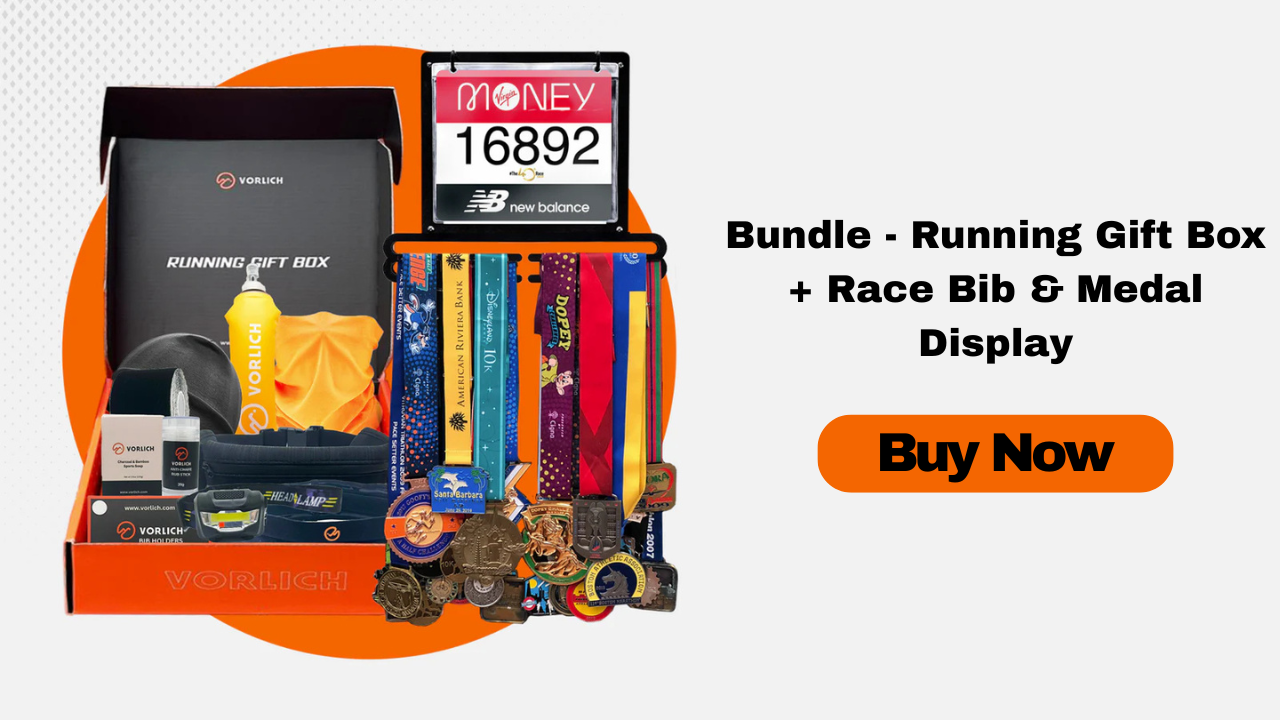
- Look for curated sets, such as the Vorlich Running Gift Box, which includes a running belt plus other essentials—ideal for beginners or runners returning from a break.
- Consider pairing the belt with a race entry and a creative way to display medals later, such as ideas found in medal holder and celebration guides.
Quick Buying Checklist: How to Choose the Best Running Belt
Use this short checklist to compare different belts and make a final decision quickly and confidently:
-
Fit and Size
- Does it match your waist/hip measurement?
- Is it adjustable and snug without digging in?
-
Comfort
- Are the materials soft against your skin or clothing?
- Does it stay in place during a quick test jog?
-
Storage
- Can it hold your phone, keys, and other essentials?
- Is there enough space for nutrition or hydration on long runs?
-
Hydration
- Do you need bottle holsters or pockets for soft flasks?
- Is the capacity right for your run duration and climate?
-
Safety
- Does it include reflective elements?
- Is your phone accessible in case of emergencies?
-
Durability
- Are stitching and zippers sturdy?
- Is the fabric sweat-resistant and quick-drying?
-
Style and Compatibility
- Does it work with your usual running apparel?
- Is it low-profile enough for race day as well as training?
FAQ: Common Questions About Running Belts
Where should I wear my running belt—waist or hips?
Most runners find the best comfort by wearing the belt slightly above the hips or on the natural waist. Experiment on easy runs and see where it feels most stable with minimal bounce.
Can I wear a running belt in races?
Yes. Many runners use belts during races to carry gels, phones, salt tabs, or even race bibs. Just avoid trying a brand-new belt on race day; test it during training to make sure it does not rub or bounce.
Will a running belt affect my form?
A well-fitted, low-bulk belt should not negatively affect your running form. In fact, it often improves form compared to carrying things in your hands or having heavy items bouncing in pockets.
Is a running belt better than an armband?
For many runners, belts are more comfortable than arm bands, especially on longer runs. Belts usually offer more storage, less localized pressure, and better balance. However, some runners prefer armbands for very short, casual runs.
How many belts do I need?
Some runners are fine with one versatile belt that works for most runs. Others prefer:
- A minimalist belt for short runs and races.
- A hydration belt or vest for long training runs in hot weather.
Ultimately, the right choice depends on your training volume, goals, and climate. As your running evolves and you hit new milestones, you may adjust your gear setup much like you would upgrade your medal displays or race accessories over time.
By understanding your training needs, body type, and running environment, you can confidently choose the right running belt for your training. The perfect belt will disappear on your body, leaving you free to focus on rhythm, breathing, and enjoying every mile.