Race bibs are more than just pieces of paper or fabric with a number printed on them. For many runners, each bib becomes a personal chapter in their running story—holding memories of early-morning alarms, nervous energy at the start line, the rhythm of footsteps, and the emotional rush of the finish. This article explores why race bibs become powerful personal running memories, how to preserve them, and how they can keep you motivated on your long-term running journey.
Why Race Bibs Matter Emotionally
On the surface, a race bib looks simple: a number, a few logos, maybe a timing chip. But to a runner, each bib represents:
- Months of training—early alarms, tempo runs, long runs, cross-training.
- Personal sacrifice—choosing training over late nights or extra screen time.
- Emotional highs and lows—self-doubt, breakthroughs, and “I can actually do this” moments.
- A specific time and place—a city, a race atmosphere, the weather, and the people you ran with.
That’s why many runners save their bibs. Each one is a physical anchor for an emotional memory. When you see your old race numbers, you can often recall:
- How nervous you were before your first 5K.
- The pride of finishing your first half-marathon.
- The exhaustion and joy of crossing your marathon finish line.
Over time, your race bib collection becomes a visual timeline of your evolution as a runner—proof that you started somewhere and kept going.
The Psychology of Race Bibs and Memory
Race bibs work like powerful memory cues. Psychologically, they function as triggers that help you recall rich, detailed experiences.
Several factors make race bibs especially memorable:
- Emotional intensity: Races are emotionally charged. You’re excited, nervous, focused, and often pushing your limits—this makes memories more vivid and easier to recall.
- Physical effort: Hard efforts stick in your mind. The physical discomfort and effort of racing reinforces the memory.
- Uniqueness of the event: Unlike a routine training run, race day has unique elements: crowds, music, announcements, and a specific course.
- Symbolic meaning: A bib is a symbol of identity. It says, “You belong here. You are a runner.” That feeling can be life-changing for many people.
Because of this, saving and displaying bibs can help you reconnect with these emotions long after race day is over. That can be especially powerful when motivation dips or life gets busy.
How Race Bibs Tell Your Running Story
Your race bib collection can be viewed as a running-specific scrapbook. Each number is one chapter, and together they tell your story as a runner.
Race bibs can highlight:
- Progress over time: Maybe your first bib is from a charity 5K and your later ones are from half marathons or marathons.
-
New distances and milestones:
- First 5K or 10K.
- First half-marathon.
- First marathon or ultra.
-
Different goals:
- Some races were about finishing.
- Others were about setting a PR (personal record).
- Others were simply “fun runs” with friends or family.
- Memorable conditions—the rainy race, the freezing one, the one where you ran in unexpected heat.
One of the best parts of collecting bibs is being able to see how far you’ve come—not just in times, but in confidence, resilience, and consistency.
Race Bibs and Running Motivation
Race bibs can be a powerful part of your motivation toolkit. When displayed where you can see them regularly, they act as daily reminders of what you’re capable of.
Runners often use their bibs for motivation in several ways:
- On tough training days: Looking at your old bibs can remind you that you’ve pushed through hard workouts and races before.
- After a setback: If you’re coming back from injury, illness, or a long break, your bibs show you that you’ve done it before and can rebuild again.
- During new training cycles: As you build toward a new race, old bibs from the same distance can reassure you that the process works.
Visual cues like bibs are especially helpful when you’re building sustainable running habits. If you’re also working on things like sleep, nutrition, and mindset, you might find it helpful to read about running lifestyle changes that improve well being alongside using your race bibs as motivation.
Turning Race Bibs into Physical Memorabilia
Instead of letting race bibs sit in a drawer or race packet bag, you can transform them into meaningful, long-lasting displays. This doesn’t just protect the paper—it also keeps your memories accessible.
Some effective ways to turn bibs into memorabilia include:
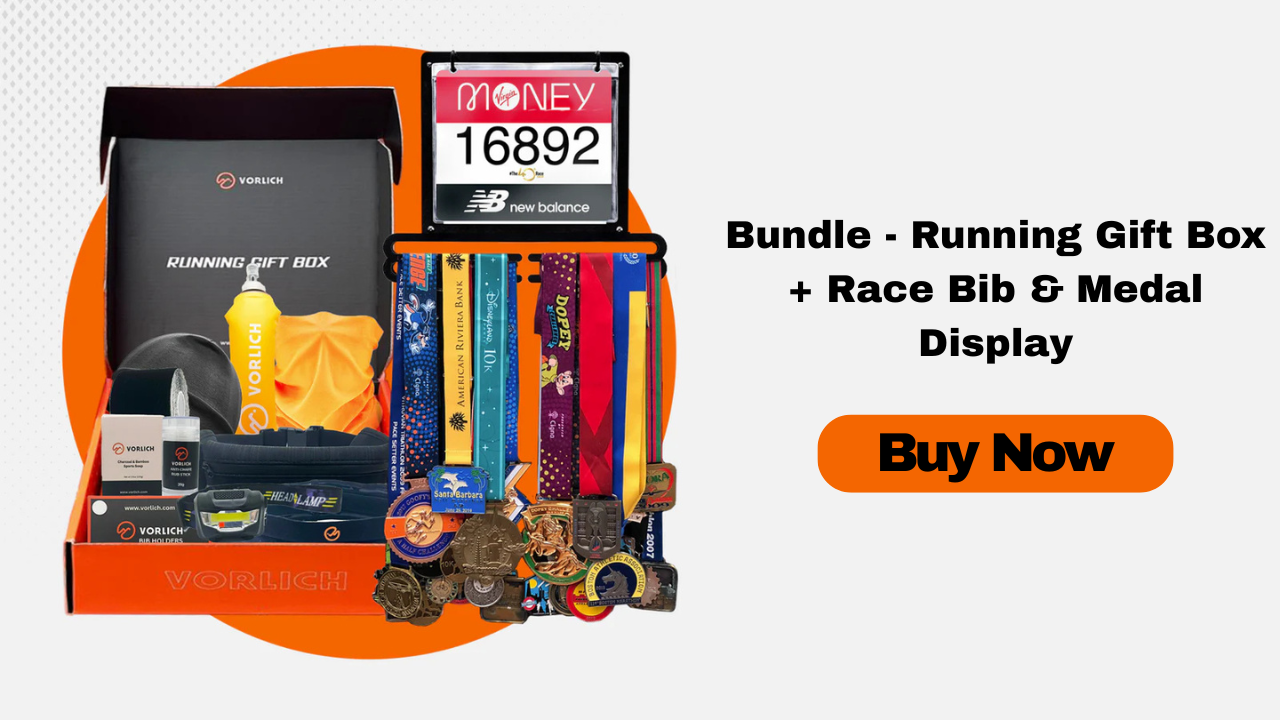
- Race bib and medal displays: Wall-mounted displays keep bibs and medals together in one place, turning your hallway, office, or workout room into a personal “hall of fame.” The Vorlich Medal Display is specifically designed to showcase both race bibs and medals, making it easy to create a clean, organized display.
- Album or binder systems: Clear protective sheets allow you to flip through bibs like a photo album. With products like the Vorlich Display Bundle, you can keep your bibs accessible for reflection and storytelling.
- Shadow boxes: Shadow boxes can combine bibs, medals, photos, and small items (like a race wristband or pace band) for special events like your first marathon.
The key is to choose a system that is:
- Easy to update—so you actually keep up with it.
- Protective—so bibs don’t tear, fade, or get lost.
- Visible—so you see your achievements often, not just when cleaning out a drawer.
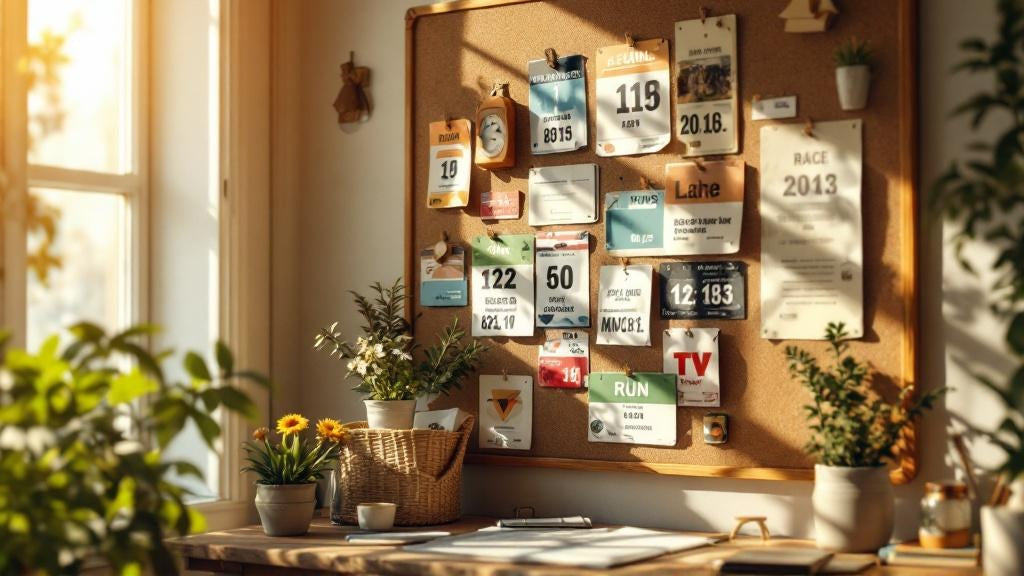
Creative Ideas for Displaying Race Bibs at Home
How you display your race bibs can reflect your personality, space, and running goals. Here are some creative, practical ideas:
-
Bib wall grid:
- Create a grid of bibs on a wall in your home gym, office, or hallway.
- Arrange bibs by:
- Distance (5K, 10K, half, marathon, ultra).
- Location (local races vs. destination races).
- Year (all races from the same season together).
-
Theme-based displays:
- “Firsts” display: first race of each distance.
- “PR wall”: bibs associated with personal best times.
- Destination races: bibs from travel races with photos or maps.
-
Mixed-media displays:
- Combine bibs with race photos and medals.
- Add small notes about:
- Your time.
- How the race felt.
- What you learned from it.
If you plan on rotating bibs and want extra storage capacity, individual storage options like Vorlich Display Sheets can help you safely archive older bibs while keeping your latest ones front and center.
Organizing and Storing Race Bibs for the Long Term
To keep your race bib memories intact for years, you’ll want a simple system that is:
- Organized—easy to browse.
- Protected—from moisture, bending, and fading.
- Expandable—as you do more races.
Consider organizing bibs using one or more of these methods:
-
By date
- Group bibs by year.
- Add a small label or note with your finish time or notable memories.
-
By distance
- Separate binders or sections for 5K, 10K, half-marathon, marathon, and ultras.
-
By race type
- Trail races vs. road races.
- Charity races vs. competitive events.
Practical tips for long-term storage:
- Use acid-free sleeves or display sheets to prevent yellowing.
- Keep them in a cool, dry place away from direct sunlight to avoid fading.
- If you tape anything to the bib (like notes or receipts), use archival-safe materials.
If you already display your race medals, you may want a consistent system for both medals and bibs. For medals specifically, it can help to read about how to store and protect race medals long term so that your whole collection—bibs and medals—ages well together.

Linking Race Bibs to Your Running Goals
Race bibs aren’t just nostalgia pieces—they can also be active tools for planning and tracking your future running goals.
Here’s how to connect your bibs to forward progress:
-
Track performance trends:
- Write your finish time, distance, and key notes on the back of each bib:
- Weather conditions.
- Fueling strategy.
- What went well and what didn’t.
- Look back over several bibs to see:
- Whether your times are improving.
- Which race conditions suit you best.
- What pacing strategies worked well.
- Write your finish time, distance, and key notes on the back of each bib:
-
Set distance goals:
- If your wall is full of 5K and 10K bibs, maybe the next chapter is a half-marathon.
- Or, if you have several half-marathons, maybe you’re ready to train for a marathon.
-
Visualize long-term progress:
- Use your display to map out “chapters” of your running life:
- Getting started.
- Building consistency.
- Chasing PRs.
- Exploring new distances or terrains (like trail ultras).
- Use your display to map out “chapters” of your running life:
Race Bibs as Part of Your Running Gear Ecosystem
While race bibs are technically event items rather than training gear, they sit at the center of your whole running ecosystem. They connect directly to:
- Your training cycle—all the weeks of preparation that lead to pinning on that bib.
- Your gear choices—shoes, apparel, accessories, and fueling that helped you perform your best.
- Your race day strategy—pacing, hydration, and logistics.
As you review your old bibs, you might notice patterns like:
- You raced better when you invested in appropriate gear.
- You felt more confident when you followed a structured training plan.
- You enjoyed races more when your kit was dialed in and comfortable.
If you’re refining your gear for future races, it can help to look at running gear essentials that are worth the investment so that your next race bib is attached to a more comfortable, confident performance.
Race Bibs, Community, and Connection
Race bibs don’t just represent personal achievements—they connect you to the broader running community.
-
Shared experiences:
- When you meet another runner who did the same race, the bib number instantly becomes part of a shared story.
- You can compare experiences: where you struggled, where you felt strong, how you liked the course.
-
Family and friends:
- Race bibs often remind you of who was there:
- Friends who ran with you.
- Family who came to cheer.
- Kids who made signs or joined you for a fun run.
- Race bibs often remind you of who was there:
-
Charity and cause-based running:
- Some bibs remind you of races run for causes that mattered deeply to you—from health charities to community projects.
When displayed in your home, bibs also become conversation starters. Guests ask, “What was that race like?”—and suddenly you’re reliving meaningful stories and maybe even inspiring someone else to start running.
Minimalist Runners: What If You Don’t Like Clutter?
Not every runner wants a wall full of memorabilia. If you prefer a minimalist lifestyle but still want to honor your race memories, you can still make race bibs meaningful without creating clutter.
Options for minimalist runners include:
-
Curated collection:
- Only keep bibs from:
- Major milestones (first race, first marathon, biggest PR).
- Especially meaningful events (a race with loved ones, a race after recovery from injury).
- Store these in a slim, high-quality display or binder.
- Only keep bibs from:
-
Digital archive:
- Take photos of your bibs and store them in:
- A digital album.
- A private blog or running log.
- A cloud folder organized by year or distance.
- This preserves the memory while keeping physical items to a minimum.
- Take photos of your bibs and store them in:
-
Rotating display:
- Keep a small frame or display for your current season’s bibs.
- Archive or recycle older bibs after photographing them, or store only the most meaningful ones.
If you’re already leaning toward a simpler setup with less gear, you might appreciate tips from minimal running gear for runners with limited storage, and apply a similar philosophy to your bib collection.
How to Start Building Your Race Bib Collection Intentionally
If you’re new to racing—or you’ve never really thought about keeping your bibs before now—you can start building an intentional collection that reflects your journey.
Here’s a simple, actionable approach:
-
Decide what you want your bibs to represent:
- All races, big and small?
- Only significant milestones?
- Only races where you trained consistently or followed a specific plan?
-
Create a post-race ritual:
- When you get home after a race:
- Write your time and date on the back of the bib.
- Add one to three short notes:
- How the race felt.
- Something you learned.
- What you’re proud of.
- Place the bib directly into your designated storage or display system.
- When you get home after a race:
-
Align bibs with training cycles:
- Think of each bib as the “final page” of a training chapter:
- Follow a structured plan.
- Execute on race day.
- Capture the story with your bib notes.
- Think of each bib as the “final page” of a training chapter:
For goal-oriented runners, matching your bibs to specific training plans—like a structured 10K or half-marathon plan—makes each bib feel like a completed project.
Frequently Asked Questions About Race Bibs and Memories
Do I really need to keep every race bib?
No. There’s no rule that says you must keep every bib. Many runners prefer to:
- Keep only firsts and major milestones.
- Keep bibs from PR races.
- Keep bibs that are emotionally meaningful (a race with a loved one, a comeback race, etc.).
What matters is that the bibs you keep mean something to you.
Can I write on my race bibs?
Yes—and it’s a great idea. Writing on the back of your bib helps capture details your future self will appreciate, such as:
- Your official time.
- Weather conditions.
- How your pacing went (strong start, struggled at mile 8, strong finish, etc.).
- How you felt physically and mentally.
How do I keep bibs from getting damaged?
To protect race bibs:
- Use protective sleeves or display sheets.
- Avoid storing them in damp areas like basements without protection.
- Keep them away from direct sunlight that can fade ink over time.
What if I don’t have space for a wall display?
You can still preserve your memories by:
- Using a binder or album with clear sleeves.
- Creating a digital archive of bib photos.
- Keeping a small, rotating display for just a few special races at a time.
Final Thoughts: Why Race Bibs Are Worth Keeping
Race bibs may look simple, but they carry powerful personal meaning. They represent the effort, discipline, and courage it takes to sign up, train, and show up on race day. Over time, they become more than numbers—they become a visual record of:
- Who you were when you started.
- Who you became through consistent training.
- How running has shaped your confidence, health, and identity.
By preserving and displaying your race bibs—whether through wall displays, binders, or carefully curated collections—you give yourself an ongoing source of motivation, gratitude, and perspective. And each new bib you pin on is a reminder that your running story is still being written.
If you also enjoy gifting or receiving running-related items that support training and race memories, you might find inspiration in small running gifts that make a big difference, especially if you’re looking for thoughtful ways to celebrate your own races or those of runners you care about.