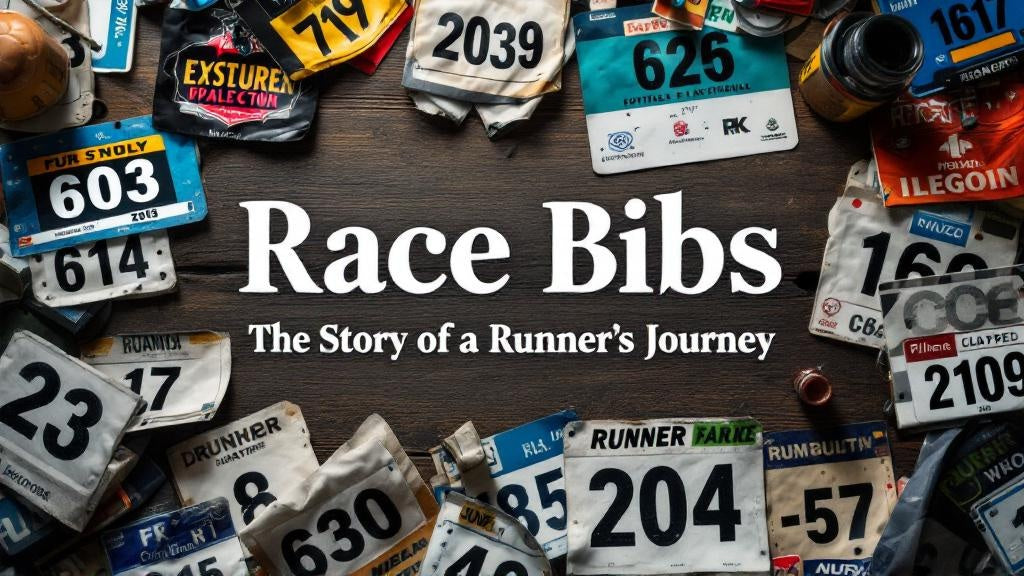
Every runner has a story, and often the most visible chapter of that story is pinned right to their shirt: the race bib. Those crumpled pieces of paper or fabric do more than display a number. They track finish times, mark personal milestones, and capture the emotion of race day. Over time, a collection of race bibs becomes a visual diary—a tangible record of your running journey, your growth, your setbacks, and your proudest breakthroughs.
What Race Bibs Really Mean to Runners
At first glance, a race bib looks like a simple tool for race organizers: a number, some sponsor logos, maybe a timing chip. But for runners, race bibs become deeply personal artifacts. They capture where you were, physically and emotionally, at a specific moment in your running journey.
Race bibs typically include:
- A unique race number assigned just to you
- Event name, date, and sometimes distance
- Branding or sponsor logos
- Timing chip (often RFID) for accurate results
- Occasional personalization, such as your name or age group
Those details might seem small, but when you look back over years of racing, they help you remember:
- Where your running journey started
- How your goals have changed over time
- Which events pushed you beyond your comfort zone
- Who you were running for—yourself, a cause, or a community
Because of this emotional connection, many runners naturally start treating bibs as keepsakes, not trash. If that resonates with you, you’ll likely enjoy reading more about why race bibs become personal running memories and how others preserve their own collections.
The Emotional Story Behind Each Bib
Every race bib represents a different chapter in your story as a runner. Even if the bibs look similar, the experiences behind them are rarely the same.
The First Race Bib: A New Identity
Your first bib often carries the most emotional weight. It marks the moment you stopped saying “I might try a race someday” and actually showed up. That first number pinned to your shirt is a symbol of:
- Commitment – You signed up, trained, and toed the line.
- Vulnerability – You didn’t know exactly how it would go, but you tried anyway.
- Belonging – You became part of the running community.
Bibs From Your Toughest Races
Some bibs bring back memories of races that didn’t go to plan—hot weather, stomach issues, missed PRs, or even a dreaded DNF (Did Not Finish). These bibs are important because they remind you that:
- Progress is rarely linear.
- Even “bad” races teach you something valuable.
- Showing up on hard days is an act of strength.
When you feel stuck in training or discouraged by a setback, going back through those bibs can be motivating. They prove you’re capable of overcoming rough days and still moving forward. That mindset pairs well with strategies for building consistency and resilience, like those shared in how to stay motivated during long training periods.
Bibs From Your Breakthrough Races
Then there are the bibs from the days everything clicked. Maybe you:
- Crushed a personal record (PR) you’d been chasing for years.
- Finished your first half marathon or marathon.
- Surprised yourself with a strong negative split.
- Ran a charity race for a cause you care deeply about.
Those bibs feel like badges of transformation. They tell the story of how your training, discipline, and patience paid off. Every time you see them, you’re reminded that your hard work matters.
How Race Bibs Mark Your Running Milestones
Because race bibs are tied to specific events, they’re perfect markers for the major milestones in your running life. Over time, your bib collection can show a clear progression from new runner to confident racer.
Common Milestones Captured by Bibs
- Your First Organized Race – Often a 5K or fun run that makes you realize you can do more than you thought.
- First 10K or Half Marathon – The leap from casual running to structured training.
- First Marathon – A major identity shift. You’re not just “someone who runs”—you’re a marathoner.
- First Trail or Ultra Race – The moment you explored new terrains or extended distances.
- Age Group Podiums or Awards – Bibs tied to performances that earned extra recognition.
Tracking Progress Through Bib Details
If you take notes on your bibs or log races digitally, you can track progress over time:
- Compare finishing times from the same race year after year.
- Note how pacing, fueling, and gear choices evolved.
- See how your confidence grew as distances increased.
Consider writing on the back of each bib:
- Date and distance
- Finish time and pace
- Weather conditions
- How you felt physically and mentally
- One key lesson from the race
This simple habit turns every bib into a detailed chapter of your running history, making your collection even more meaningful later.
Race Bibs and the Ritual of Race Day
Race bibs are also central to one of the most important parts of running: the pre-race ritual. The way you handle your bib often sets the tone for your entire event.
The Night Before: Preparing Your Bib
Many runners have a predictable routine before race day:
- Lay out the full race outfit (the classic “flat runner”).
- Attach the bib to their shirt, shorts, or race belt.
- Double-check safety pins or clips.
- Place the entire kit somewhere visible and ready.
This routine is more than practical—it’s calming. It signals to your brain that everything is ready and helps reduce last-minute stress. To create a smoother experience on race morning, it helps to understand the rest of the pre-race checklist, such as warming up, hydrating, and getting to the start line on time. Guidance like what to do on race morning before the start line can help you build a race-day routine that supports your goals.
Where You Pin Your Bib (and What It Says About You)
Even the placement of your bib can become part of your racing style:
- Centered on the chest – Classic and practical; easy for photographers and officials.
- On a race belt – Popular with triathletes and marathoners who want to swap layers or make bathroom breaks easier.
- On shorts or tights – Favored by some trail runners and those who prioritize top-layer flexibility.
Over time, your preferred bib setup becomes part of your personal ritual. It’s a small but meaningful part of feeling race-ready.
From Paper to Memory: How Bibs Evolve With Your Goals
As your goals shift, your race bib collection changes too. That evolution tells a powerful story about your development as a runner.
From Local 5Ks to Destination Races
Many runners begin with small, local events. Those early bibs might look simple: basic printing, minimal graphics, short distances. As you grow, you might add:
- Destination race bibs from travel adventures.
- Iconic race bibs from major city marathons or famous events.
- Themed race bibs from costume runs or holiday races.
From “Just Finish” to Performance Focus
At first, every bib might represent a single goal: finish the race. Over time, the story behind your bibs usually becomes more layered:
- Some bibs mark pacing experiments.
- Others show new training methods or coaching support.
- A few will represent attempts at qualifying standards or personal time barriers.
Seeing that evolution across your race bibs is a powerful reminder of how far you’ve come, especially on days when motivation is low.
The Science and Technology Behind Race Bibs
Beyond nostalgia, race bibs are also sophisticated tools that support timing accuracy, race logistics, and safety.
Timing Chips and Accurate Results
Most modern bibs include an embedded RFID (Radio Frequency Identification) chip. This allows race organizers to:
- Track when you cross timing mats at various points on the course.
- Record both “gun time” and “chip time.”
- Provide accurate results even in crowded start corrals.
For many runners, the bib is directly tied to a specific finish time or PR, which magnifies its emotional value. One look at that bib and you instantly recall your pace, splits, and how the final miles felt.

Safety and Identification
Race bibs often contain important safety information:
- Medical alerts or emergency contact details on the back.
- Wave or corral assignments to manage crowd flow.
- Color coding by distance, pace group, or category.
These elements make big events possible by helping organizers manage tens of thousands of runners safely and efficiently.
Turning Race Bibs Into Displays You’ll Actually Love
Throwing race bibs into a drawer works for a while—but eventually you may want a better way to celebrate your journey. Turning bibs into a display transforms them from clutter into a source of daily motivation.
Why Displaying Bibs Matters
A visible race bib display can:
- Reinforce your identity as a runner, even during off-seasons.
- Boost motivation on days when training feels tough.
- Spark conversations with guests who notice your collection.
- Encourage reflection on what you’ve achieved and what’s next.
Medals and Bibs: A Combined Story
Bibs and medals often go hand in hand, and displaying them together creates a stronger narrative. If you’re looking for inspiration on showcasing medals alongside bibs, ideas from creative medal display ideas for dedicated runners can help you design a setup that fits your space and style.
Dedicated Display Solutions
Purpose-built display systems make it easier to keep race bibs organized, accessible, and protected from damage. For example:
- Vorlich Medal Display – A combined race bib and medal display that lets you hang medals while neatly storing and showing off bibs in one place.
- Vorlich Display Bundle – Ideal if you already have a large bib collection or plan to run many races in the future, giving you extra capacity from the start.
- Vorlich Display Sheets – Additional protective sheets for expanding your display as your race history grows.
These types of systems turn your bib collection into a curated story instead of a pile of forgotten paper.
Practical Tips for Storing and Protecting Race Bibs
If you want your race bibs to last, a little care goes a long way. Sweat, rain, and general wear can damage them over time, especially if you race often.
Immediate Post-Race Care
- Let damp bibs air dry before storing them.
- Gently flatten creased or curled bibs under a book.
- Write race details on the back while the memory is fresh.
Long-Term Storage Options
To keep bibs organized and protected, consider:
- Clear plastic sheets or sleeves in a binder (sorted by year or distance).
- Dedicated display sheets that protect bibs while allowing them to be easily viewed.
- Shadow boxes for particularly meaningful races paired with medals or photos.
Organizing for Easy Reflection
How you organize bibs affects how often you look through them. Useful organization methods include:
- Chronological order to watch your progression over time.
- Sorted by distance (5K, 10K, half, marathon, ultra).
- Grouped by theme (PR races, destination races, charity events).
The more accessible your race bibs are, the more likely you’ll revisit them and draw motivation from your own story.
How Race Bibs Keep You Motivated
Race bibs don’t just record past achievements—they actively influence your future motivation and training consistency.
Visual Reminders of What You’ve Done
On days when you don’t feel like heading out the door, seeing your race bibs can remind you of:
- How good it felt to cross finish lines you once thought were impossible.
- The discipline you built over weeks and months of training.
- The community and friendships you’ve found through running.
Setting New Goals Based on Old Bibs
Runners often use bibs as benchmarks for future goals:
- “This was my first half marathon—now I want to go back and run it faster.”
- “This marathon bib reminds me I can handle the distance—now I’ll train for a more aggressive pace.”
- “This charity race bib reminds me why I started—time to sign up again and fundraise more.”
Looking back at your bibs makes it easier to set specific, realistic, and meaningful goals for the future.
Incorporating Race Bibs Into Your Running Lifestyle
When you view race bibs as part of your running lifestyle—not just race-day accessories—they can shape your routines, your environment, and even the way you talk about your sport.
Creating a Running Corner or Wall
If you have the space, consider dedicating a section of your home to your running story:
- Hang framed photos from key races.
- Display medals and bibs together.
- Include a board for upcoming goals or race registrations.
This kind of setup turns your running achievements into a daily visual affirmation. For additional inspiration on combining medals and bibs in creative ways, you can explore ideas from creative ways to display running medals and bibs, which offers layouts that work in apartments, home offices, or shared spaces.
Sharing Stories With Your Community
Race bibs are natural conversation starters:
- Fellow runners will ask about the events and distances.
- Non-runners may be inspired by your dedication and progress.
- Family members, especially kids, can learn about goal-setting and perseverance.
Talking about the stories behind each bib can deepen your sense of pride and help you process both the highs and lows of your running journey.
Using Bibs to Celebrate Small Wins
Not every race has to be a PR or a huge event. Some bibs simply represent:
- Coming back from injury.
- Running through a tough season of life.
- Showing up when you didn’t feel your best.
These “small win” bibs are often the most powerful reminders that consistent effort matters. They align perfectly with the mindset of celebrating small running wins that lead to big progress, where every step forward, no matter how modest, is celebrated as part of a larger journey.
Why Race Bibs Will Always Matter
Race bibs might seem simple, but they hold surprising power. They combine:
- Data – Times, distances, events, and performance markers.
- Emotion – Fear, joy, pride, relief, and everything in between.
- Identity – The moment you went from “someone who runs” to “a runner.”
- Memory – The people you ran with, the weather, the city, the finish-line feeling.
As your running journey continues, each new bib adds another layer to your story. You may outgrow certain distances, change training philosophies, or shift priorities—but those bibs will always mark the path you took to get where you are today.
In the end, that’s why race bibs tell the story of a runner’s journey so effectively: they capture both the measurable facts of your races and the immeasurable growth that happens along the way. Treat them like the chapters they are, and they’ll continue to motivate and inspire you for many miles to come.