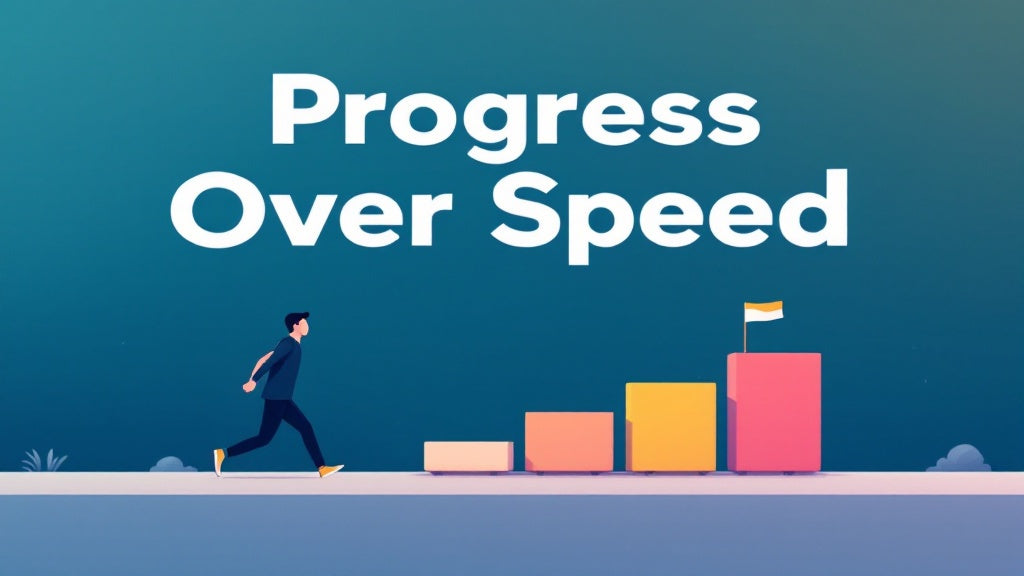
When you start running, it’s tempting to judge every workout by one metric: speed. How fast was my pace? Did I beat my last time? But over the long haul, what truly keeps runners consistent, healthy, and happy is not raw speed—it’s the ability to see progress in many forms. From running your first continuous mile to finishing your first 5K or marathon, learning to focus on visible progress rather than instant pace gains is one of the most important mindset shifts you can make in your running journey.
Why Seeing Progress Matters More Than Speed
Speed is easy to compare. You can line up your pace against elite runners, friends, or strangers on a leaderboard in seconds. But this constant comparison can quickly drain your motivation and overshadow your real achievements.
Focusing on visible, trackable progress—instead of chasing “fast at all costs”—matters because:
- Progress is personal: It respects your starting point, history, and life demands.
- Progress is sustainable: It encourages steady improvement, not burnout cycles.
- Progress is motivating: When you can see change, you want to keep going.
Many consistent runners adopt a philosophy of “progress, not perfection”. This simple idea helps you build long-term running consistency, which is the real driver of fitness, speed, and confidence over time.
The Psychology of Progress for Runners
Understanding why progress feels so powerful can help you harness it more intentionally in your training.
The motivation loop: effort → progress → motivation
When you notice progress, a simple but strong loop forms:
- You put in effort.
- You see even a small improvement.
- You feel successful, which boosts motivation.
- You’re more likely to put in effort again.
This loop is one reason why tracking progress keeps runners engaged. Visible progress gives your brain “proof” that your work is paying off, which is far more motivating than vague hopes of getting faster someday.
Why visible progress beats raw talent
Raw speed is influenced by genetics, past training, and even age. You can’t control all of that. But you can control habits like:
- Showing up for scheduled runs
- Improving your running form
- Sleeping and recovering better
- Fueling properly before and after workouts
When you focus on controllable signs of progress, you build confidence that isn’t tied to one “perfect” race or a single pace number.
Progress keeps running enjoyable
Seeing improvement, even when it’s small, helps you:
- Stay curious about what you can do next
- Enjoy training blocks instead of just race day
- Recover mentally after tough workouts or bad races
Runners who measure and celebrate their development over time tend to find it easier to keep running fun and stress-free, regardless of their current speed.
Types of Progress Beyond Speed
Speed is only one metric of progress—and often a slow-moving one. Here are other meaningful ways runners can improve that matter just as much, if not more.
1. Endurance progress
Endurance progress is all about how far or how long you can keep moving comfortably.
- Running your first continuous 10 minutes without stopping
- Finishing your first 5K, 10K, half marathon, or marathon
- Completing a long run at a comfortable conversational pace
- Recovering faster from long efforts
Many new runners focus on how to run longer without stopping as a beginner rather than on running faster. This approach builds a solid aerobic base, which later supports natural speed gains.
2. Consistency progress
Showing up is a major form of progress. You might measure consistency as:
- How many weeks in a row you’ve run at least 2–3 times
- Sticking to your planned training schedule most of the time
- Gradually increasing weekly mileage without injury
Consistent training is the foundation of almost every long-term performance improvement. Even if pace doesn’t change dramatically week to week, the habit of regular training sets you up for better speed later.
3. Recovery and resilience progress
Improved recovery is a powerful sign that your body is adapting:
- Less soreness after similar workouts
- Lower resting heart rate over time
- Ability to complete back-to-back training days
- Fewer minor niggles or flare-ups
These changes show your cardiovascular and muscular systems are getting stronger, even before you see big pace drops.
4. Mental and emotional progress
Running is as mental as it is physical. Important forms of mental progress include:
- Handling discomfort better during tough intervals or hills
- Staying calm when a run doesn’t go as planned
- Building confidence in your ability to complete workouts
- Shifting from “I can’t do this” to “This is hard, but I can handle it”
Many runners discover that the connection between race bibs and personal growth is deeper than they first realized. Every bib can represent lessons learned in resilience, patience, and self-belief—not just finish times.
5. Technical and form progress
Improvements in running form and efficiency can be subtle but powerful:
- More relaxed shoulders and arms while running
- Smoother cadence and foot strike
- Better posture, especially late in runs
- Less wasted movement and effort
These changes often lead to better performance at the same effort level, even before your absolute speed improves.
6. Lifestyle and habit progress
Running progress is also visible in your daily lifestyle:
- Sleeping more consistently
- Hydrating regularly without forcing it
- Planning meals around training needs
- Managing stress more effectively
These habits support better running performance over months and years, not just one race season.
How to Measure Your Running Progress
To benefit from progress, you have to see it clearly. That means measuring it in ways that are simple, honest, and meaningful.
Use multiple metrics, not just pace
Track more than just “minutes per kilometer” or “minutes per mile.” Useful metrics include:
- Frequency: runs per week
- Consistency: number of consecutive weeks you’ve trained
- Volume: total weekly or monthly distance
- Time-on-feet: minutes spent running, especially for beginners
- Perceived effort: how hard a run feels on a 1–10 scale
- Heart rate (if you track it): pace at a given heart rate over time
Keep a simple running log
Your log doesn’t need to be complicated. Include:
- Date and distance or time
- Type of run (easy, long, intervals, hills)
- How it felt (easy / moderate / hard)
- Any notes (sleep, weather, shoes, mood)
Over weeks, patterns will emerge. You’ll see where you’re improving, where you’re consistent, and where tweaks might help.
Use progress-focused tools thoughtfully
Watches, apps, and training platforms can be extremely helpful—when used for progress, not perfection. If you’re motivated by data, consider:
- Tracking “streaks” of weekly runs
- Comparing your current easy pace to what it was 3–6 months ago
- Looking at how far you can run at a comfortable heart rate compared to earlier weeks
Some runners also like physical reminders, like medal or bib displays. Seeing a physical record of your efforts can reinforce the idea that your journey is about growth, not just speed.
Setting Better Running Goals
Good goals turn “I want to get faster” into a practical, progress-based plan. Research on goal setting in exercise shows that clear, realistic goals support better adherence, motivation, and performance.
Outcome vs. process vs. performance goals
Consider three types of goals:
-
Outcome goals: The end result you want.
- Example: “Finish my first half marathon.”
-
Performance goals: A measurable target you can influence.
- Example: “Run 5K in under 30 minutes.”
-
Process goals: The actions that lead to performance.
- Example: “Run three times a week for the next eight weeks.”
Process goals are where progress lives. They give you daily and weekly wins that build momentum toward your longer-term outcomes.
Turn vague speed goals into progress goals
Instead of only setting “I want to run faster,” try:
- “Increase my weekly mileage by 10–15% over the next 6 weeks, as long as I feel good.”
- “Complete one structured speed or hill workout every week for 8 weeks.”
- “Keep all easy runs at a comfortable conversational pace to build aerobic strength.”
These goals shift your attention from comparing yourself to others to building your own capacity step by step.
Align your gear and environment with your goals
Your running environment and equipment can either support or undermine your progress. For example, choosing minimal running gear that covers most situations can keep your routine simple and consistent, helping you stick to your process goals without overthinking what to wear or bring.
How to Stay Motivated When Speed Plateaus
Every runner eventually reaches a point where pace improvements slow down or stall, especially after the first big wave of beginner gains.

Recognize that plateaus are normal
Training adaptations are rarely linear. You’ll experience:
- Quick progress early on
- Phases where speed hardly changes
- Occasional breakthroughs that seem sudden but are built on months of quiet work
Knowing this helps you stay patient and calm when numbers on your watch stop improving for a while.
Shift your focus to different progress markers
When speed plateaus, ask:
- Can I run the same distance with less effort than before?
- Am I handling weekly mileage better than I did a few months ago?
- Is my form more relaxed and sustainable?
- Am I less injury-prone or recovering faster?
These are signs of real progress, even if your pace graph looks flat for a stretch.
Use strategies to regain motivation
If you’re struggling to stay engaged while pace stalls, consider:
- Changing your route to make runs more interesting
- Joining a local running group for social accountability
- Trying new types of sessions (hills, trails, fartlek, or strides)
- Focusing on a different distance or event for your next race
You can find additional ideas and strategies for staying positive when progress feels slow in resources on motivation when progress stalls.
Practical Strategies to See and Celebrate Progress
Seeing progress is partly about mindset—but it’s also about practical habits you can build into your routine.
1. Track your “small wins” every week
At the end of each week, note 2–3 specific wins, such as:
- “Ran three times even though work was stressful.”
- “Long run felt easier than last month’s long run at the same distance.”
- “Completed my first tempo session without stopping.”
This habit reinforces progress regularly, not just on race days.
2. Regularly review your training history
Look back every 4–8 weeks and ask:
- How has my weekly mileage changed?
- Are my easy runs feeling easier at the same pace?
- Have I added new types of workouts or terrain?
- Am I more confident now than I was a month or two ago?
This macro-view helps you avoid getting stuck on one “bad” week or isolated tough session.
3. Celebrate progress even when training feels hard
Not every training block will feel smooth. That’s where intentional celebration matters most. Take time to reflect on celebrating progress when training feels hard—this might mean:
- Rewarding yourself for completing a challenging week
- Journaling about what you handled well, not just what went wrong
- Sharing milestones with friends or a running community
4. Use races as checkpoints, not verdicts
Think of races as data points in a longer journey:
- Notice how your pacing, fueling, and mindset have improved.
- Compare how you felt at the same distance 6–12 months ago.
- Look beyond the official time to see how your strategy and resilience evolved.
Your finish time is one metric, but not the whole story.
5. Give your goals a visual home
Some runners find it motivating to display medals, race bibs, or training plans where they can see them daily. This visual cue reminds you of the effort you’ve already invested, reinforcing the value of your ongoing progress.
Common Mistakes Runners Make About Progress
Understanding what doesn’t work is just as important as knowing what does.
Mistake 1: Chasing speed every run
Constantly trying to run faster day after day often leads to:
- Overtraining and fatigue
- Higher risk of injury
- Loss of enjoyment
Most runners benefit from a structure where the majority of runs are easy, with only a small portion done at higher intensity.
Mistake 2: Comparing to others, not to your past self
Online leaderboards and social media make it simple to compare yourself to faster runners. But their story isn’t yours. Their pace reflects:
- Different genetics
- Different training history
- Different life obligations and stress levels
Your best comparison is with your own past performance. Ask, “Where was I three months ago?” instead of “How fast is everyone else?”
Mistake 3: Ignoring non-pace improvements
Runners often overlook real progress because they only look at pace charts. You might miss that you:
- Can run farther without walking
- Recover quicker between sessions
- Feel less anxious heading into hard workouts
- Are dealing with stress in healthier ways through running
When you broaden your definition of progress, you notice far more reasons to keep going.
Mistake 4: Setting only “all-or-nothing” goals
Goals like “sub-3 marathon or bust” can make solid progress feel like failure. Instead, set:
- A stretch goal (ideal outcome)
- A realistic goal (based on training data)
- A minimum goal (something you can be proud of achieving)
This approach protects your sense of progress, even if race day conditions or life circumstances aren’t perfect.
Balancing Progress, Speed, and Long-Term Health
Focusing on progress over speed doesn’t mean ignoring speed entirely. It means seeing speed as one consequence of good long-term habits, not the only objective.
Why long-term thinking matters
A “fast at any cost” mindset often leads to:
- Ramping up mileage or intensity too quickly
- Ignoring early injury warning signs
- Burnout and quitting altogether
By contrast, a progress-based mindset encourages:
- Gradual mileage increases
- Regular easy days and rest days
- Respect for how training fits into the rest of your life
Training plans that prioritize progress
Structured training plans that steadily increase volume and introduce variety help you feel continual improvement in multiple areas (endurance, strength, mental toughness), not just pace. Learning how to prepare for race day using a training plan can make it easier to see and trust this kind of systematic progress.
Using speed as a tool, not a ruler
Speed sessions, races, and time trials are useful tools when:
- They’re scheduled intentionally, not done every day
- They’re placed in the context of your broader training block
- They’re evaluated alongside how you felt, not just the raw numbers
This way, speed helps you measure adaptation without becoming a constant source of pressure.
Sample Progress-Focused Training Approach
Below is an example of how you might structure several weeks with progress, not pure speed, as the central focus. Adjust distances and times to your level.
Weekly structure (example)
-
Run 1 – Easy run
- Goal: Comfortable pace where you can talk in full sentences.
- Progress marker: Time-on-feet and how relaxed you feel, not pace.
-
Run 2 – Quality session (hills, intervals, or strides)
- Goal: Build strength or speed with short controlled efforts.
- Progress marker: Completing the session with good form, not all-out effort.
-
Run 3 – Long run
- Goal: Gradually extend distance or duration.
- Progress marker: Being able to run a bit longer or finish feeling stronger compared to a few weeks ago.
Progress markers over 8–12 weeks
Instead of focusing solely on your 5K time every week, look at:
- Weekly mileage creeping up within a safe range
- Long run distance or time increasing slowly
- Better control of pacing in hard sessions
- Less soreness after similar workouts
- More confidence heading into your key sessions
By the time you race or test yourself at the end of that block, your finishing time will reflect dozens of small improvements spread across weeks—not just a handful of all-out sessions.
Final Thoughts: Progress Over Pace
Speed is satisfying, but it’s also fickle. It can be affected by weather, terrain, sleep, stress, and countless other factors you don’t fully control. Progress, on the other hand, is broader and more stable. It shows up in your habits, your endurance, your mindset, your resilience, and your ability to keep showing up even when training feels tough.
When you build your running around seeing progress instead of chasing speed, you:
- Stay more consistent over months and years
- Enjoy training more, not just racing
- Protect your mental and physical health
- Often become faster anyway—because consistent progress compounds
Whether you’re a beginner learning to run your first mile or an experienced runner chasing a new distance, centering your mindset on visible progress will do more for your long-term success than any single pace number ever could.