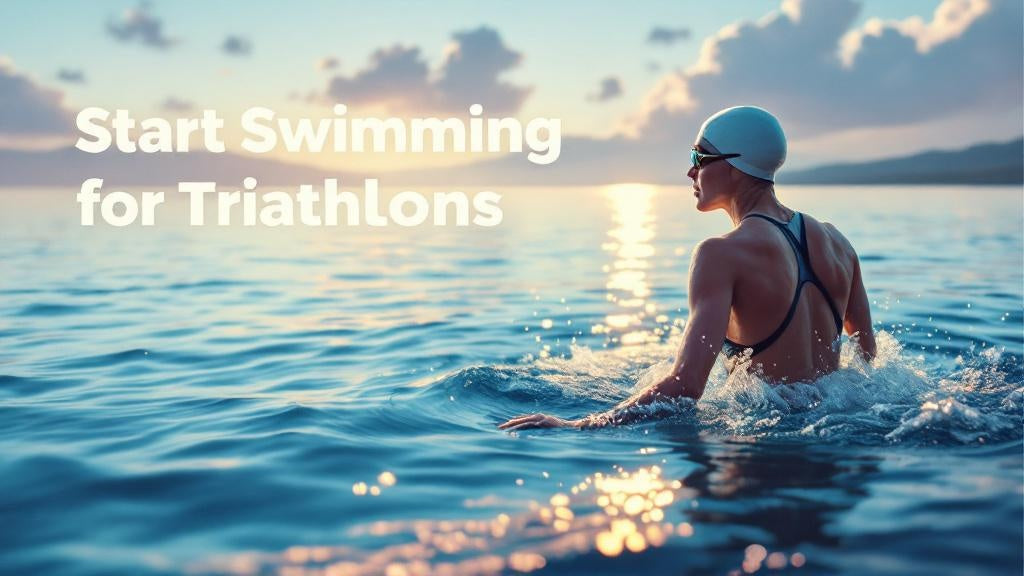
Starting swimming for a triathlon as a beginner can feel intimidating, especially if your background is mostly in running or cycling. The good news is that with a clear plan, the right technique focus, and consistent practice, you can go from nervous in the water to confidently completing your first triathlon swim. This guide breaks down everything you need to know—swim technique, gear, training plans, open-water strategies, and mindset—so you can build your triathlon swimming skills step by step.
Why Swimming Matters in Triathlon
In a triathlon, the swim is the first discipline. It sets the tone for the entire race. While it’s the shortest segment in terms of time, it has a huge impact on your overall experience.
- Confidence builder: Starting strong in the water reduces anxiety and helps you pace the bike and run better.
- Energy conservation: Efficient swimming means you exit the water fresh enough to perform on the bike and run.
- Safety and comfort: Good swimming skills help you stay relaxed, make smart decisions, and handle crowded conditions.
For beginners, the goal isn’t to be the fastest swimmer. The goal is to become efficient, calm, and consistent in the water.
Understanding Triathlon Swim Distances
Different triathlon race distances come with different swim lengths. Knowing these will help you set realistic training goals.
- Sprint Triathlon: 400–750 m swim (pool or open water)
- Olympic / Standard: 1,500 m swim
- Half Ironman (70.3): 1.9 km (1.2 miles) swim
- Ironman: 3.8 km (2.4 miles) swim
If you’re a beginner, start by targeting a sprint triathlon. It’s long enough to be a challenge but short enough to be achievable within a few months of focused swim training.
Overcoming Common Beginner Fears
Many first-time triathletes are strong on the bike or run but nervous in the water. That’s normal—and manageable.
Typical Fears
- Fear of deep or open water
- Anxiety in crowded swim starts
- Worry about not being able to breathe or panicking
- Embarrassment about being “slow” or “not a real swimmer”
How to Manage Swim Anxiety
- Start in a pool: Build comfort and technique in a controlled environment before heading to open water.
- Practice floating and treading water: Knowing you can stop and stay afloat reduces panic.
- Use gradual exposure: Move from shallow to deeper water, then from pool to open water, step by step.
- Swim with others: Join a triathlon club, masters swim group, or train with a friend for safety and motivation.
- Have a backup stroke: Develop a comfortable breaststroke or backstroke to use if you need to calm down mid-swim.
Essential Swim Gear for Beginners
Triathlon swimming doesn’t require a huge amount of gear, but a few key items will make training more effective and comfortable.
Basic Gear Checklist
- Swimsuit: Choose a comfortable, snug-fitting suit designed for training, not fashion.
- Goggles: Look for adjustable, leak-free goggles with clear or tinted lenses depending on pool or open-water use.
- Swim cap: Helps keep hair controlled, improves hydrodynamics, and adds visibility in open water.
- Towel and flip-flops: For hygiene and comfort around the pool.
Optional but Helpful Training Tools
- Kickboard: Isolates your legs to improve kick strength and body position awareness.
- Pull buoy: Supports your legs so you can focus on arm technique and rotation.
- Paddles: Build strength and feel for the water (use sparingly to avoid shoulder strain).
- Fins: Help with ankle flexibility and reinforce proper body position.
Open Water and Race-Day Gear
- Wetsuit: Optional but extremely helpful in cold water. It adds warmth and buoyancy, making you more efficient.
- Bright swim cap: In addition to race caps, high-visibility caps increase safety in open water.
- Anti-chafe balm: Use on the neck, underarms, and around the wetsuit openings to avoid irritation.
For hydration and fueling around your overall triathlon training, research gear like bottles and packs. Tools covered in resources such as best hydration packs and bottles to gift runners and triathletes can support both your swim and multi-sport training days.
Learning Basic Swim Technique
Good technique is more important than raw fitness when you start swimming for triathlons. Efficient freestyle (front crawl) helps you conserve energy for the bike and run.
Body Position
- Stay horizontal: Keep your body as flat as possible, with your head in line with your spine.
- Look down, not forward: Eyes to the bottom of the pool for a more streamlined position.
- Engage your core: A lightly engaged core keeps your hips up and reduces drag.
Arm Stroke Fundamentals
- Entry: Hand enters the water in line with your shoulder, fingers first, relaxed wrist.
- Catch: Bend your elbow and “grab” the water with your forearm and hand.
- Pull: Push water back towards your feet, keeping your elbow higher than your hand under the water.
- Finish: Complete the stroke past your hip before recovery.
- Recovery: Relax your arm as it swings over the water, elbow leading, hand close to the surface.
Kick Technique
- Small, quick kicks: Avoid huge splashes; kicks should come from the hips, not the knees.
- Relaxed ankles: Point your toes slightly; stiff ankles create drag.
- Support, not propulsion: In triathlon, the kick mainly stabilizes your body, so don’t over-kick and burn energy.
Rotation and Balance
- Rotate from your core: Roll your body slightly side to side with each stroke.
- Use rotation to breathe: Don’t lift your head; roll it with your body to find air.
- Think “swim tall”: Reach forward with each stroke to maximize your distance per stroke.
When possible, invest in a few sessions with a swim coach or a triathlon-focused swim clinic. A trained eye can identify technique issues early, saving you months of frustration.
Breathing Skills for Triathlon Swimming
Breathing is one of the biggest challenges for new swimmers. Poor breathing technique can cause panic, fatigue, and the feeling of “never getting enough air.”
Key Breathing Principles
- Exhale in the water: Blow bubbles out through your nose or mouth while your face is in the water.
- Inhale quickly to the side: Turn your head with your body rotation to take a quick breath.
- Don’t hold your breath: Holding your breath increases CO₂ buildup and anxiety.
Breathing Drills
- Sink downs: Stand in shallow water, take a breath, then submerge and exhale slowly. Repeat until relaxed.
- Kick with side breathing: Using a kickboard, kick while turning your head to the side to breathe.
- 3-5-3 breathing: Swim freestyle breathing every 3 strokes for a length, then every 5 strokes the next length, then back to 3.
Bilateral Breathing
Bilateral breathing (breathing to both sides) isn’t mandatory, but it is useful for triathletes:
- Helps you adapt to waves and sun glare from either side.
- Promotes more balanced stroke mechanics.
- Allows you to keep an eye on competitors or buoys on either side.
Building Your Swim Fitness
Once you’re comfortable with basic technique, it’s time to build endurance for triathlon swimming. Consistency is more important than intensity early on.
How Often Should You Swim?
- Beginners: 2–3 sessions per week
- Intermediate (building toward Olympic distance): 3–4 sessions per week
Each session can be 30–60 minutes, depending on your level and schedule.
Types of Swim Workouts
- Technique sessions: Focus heavily on drills and form, not speed.
- Endurance sessions: Longer, steady intervals to build distance and comfort.
- Speed or “quality” sessions: Shorter intervals with rest to build efficiency and pace.
Basic Structure of a Swim Workout
- Warm-up (5–10 minutes): Easy swimming, drills, and gentle kicking.
- Main set (15–30 minutes): Intervals tailored to your goals (e.g., 8 × 50 m, 4 × 100 m).
- Cool-down (5–10 minutes): Easy swimming, relaxed strokes.
Sample 8-Week Beginner Swim Plan
This simple plan is designed for someone who can comfortably swim 25 m but struggles with longer distances. Adjust distances as needed.
Weeks 1–2: Comfort and Technique
- Sessions: 2–3 per week
- Focus: Relaxation, breathing, body position
Example Session:
- Warm-up: 4 × 25 m easy freestyle, 20–30 seconds rest
- Drills: 4 × 25 m side kick, 4 × 25 m catch-up drill
- Main set: 6 × 25 m freestyle, focus on form, plenty of rest
- Cool-down: 2 × 25 m easy swim, any stroke
Weeks 3–4: Building Short Intervals
- Sessions: 3 per week, 30–40 minutes each
- Focus: Stringing together more lengths with control
Example Session:
- Warm-up: 6 × 25 m easy
- Drills: 4 × 25 m fingertip drag, 4 × 25 m bilateral breathing focus
- Main set: 6 × 50 m freestyle, 20–30 seconds rest, maintain relaxed, steady pace
- Cool-down: 4 × 25 m easy choice
Weeks 5–6: Extending Distance
- Sessions: 3 per week, 40–45 minutes
- Focus: Continuous swimming and pacing
Example Session:
- Warm-up: 4 × 50 m easy
- Drills: 4 × 25 m sculling drills, 4 × 25 m kick with board
- Main set: 4 × 100 m freestyle, 30–45 seconds rest
- Cool-down: 4 × 25 m very easy swim
Weeks 7–8: Race Simulation
- Sessions: 3–4 per week, 45–60 minutes
- Focus: Longer sets, open-water style pacing, minimal stops
Example Session: (Beginner triathlon swim basics)
- Warm-up: 300 m easy, mix strokes
- Drills: 4 × 25 m sighting practice (look forward every 6–8 strokes)
- Main set: 3 × 200 m at your goal race pace, 45–60 seconds rest
- Cool-down: 200 m easy
By the end of week 8, most beginners can swim the distance of a sprint triathlon calmly and continuously.
Open Water Swimming for Triathletes
Open water is very different from the pool. There are no lane lines, no walls, and conditions can change quickly. Practicing in open water is essential for triathlon race preparation.
Key Open Water Skills
- Sighting: Lifting your eyes forward occasionally to look for buoys and stay on course.
- Navigating crowds: Getting used to swimming near others, contact, and turbulence.
- Starting and stopping: Practicing beach starts, deep-water starts, and treading water calmly.
Safety Tips for Open Water
- Never swim alone—go with a friend, group, or organized session.
- Use a brightly colored swim cap for visibility.
- Consider a swim buoy for extra visibility and a bit of flotation if you need to rest.
- Start near the shore and gradually build distance as your confidence grows.
- Check conditions: water temperature, waves, currents, and local rules or lifeguard coverage.
How to Practice Sighting
- In the pool, pick a target on the wall. Every 6–8 strokes, quickly lift your eyes forward, then turn to breathe as usual.
- In open water, use buoys, landmarks, or trees as reference points.
- Keep your kick steady while sighting to avoid sinking hips.
Race Day Swim Strategies
Having a plan for triathlon race day helps you stay calm and efficient in the water.
Before the Start
- Arrive early to check the swim course, entry and exit points, and conditions.
- Do a short warm-up in the water if allowed (5–10 minutes easy swimming).
- Practice a few short accelerations to get used to the cold, your wetsuit, and your breathing.
Positioning Yourself
- If you’re nervous, start toward the back or sides of your wave to avoid the busiest traffic.
- Avoid lining up with the fastest swimmers unless you are one of them.
- Give yourself space so you can settle into your own rhythm quickly.
Pacing the Swim
- Start slightly easier than you think you should; let your breathing settle.
- Once you feel comfortable, increase to a strong but sustainable pace.
- Remember: You cannot win your triathlon in the swim, but you can make the rest of the race harder by going out too fast.
If You Panic Mid-Swim
- Roll onto your back or switch to breaststroke.
- Take deep, controlled breaths; focus on exhaling slowly.
- Signal a kayak or lifeguard if you need to rest—they’re there for safety.
- When calm, resume freestyle at an easier pace.
Strength and Mobility for Better Swimming
While swimming itself builds specific fitness, basic strength and mobility work can make you more powerful and reduce injury risk.

Key Strength Areas for Triathlon Swimmers
- Shoulders and upper back: For a strong, stable pull.
- Core: To maintain a streamlined body position.
- Hips and glutes: For efficient kick and rotation control.
Useful Exercises (2–3 Times per Week)
- Planks and side planks
- Rowing movements (resistance bands, dumbbells, or machines)
- Shoulder external rotations with a band
- Bodyweight squats and lunges
- Glute bridges or hip thrusts
Mobility Focus
- Thoracic spine rotation (for better body roll)
- Shoulder flexibility (to reach and pull effectively)
- Ankle flexibility (for a more effective kick)
Nutrition and Recovery for Swim Training
Even though swim sessions may feel shorter than long runs or rides, they still place stress on your body. Supporting recovery helps you make steady progress.
Pre-Swim Nutrition
- For early morning sessions: light snack such as a banana, toast, or small energy bar 30–60 minutes before.
- For later sessions: balanced meal 2–3 hours before, including carbohydrates, a bit of protein, and some healthy fats.
- Hydrate adequately—dehydration still happens in water.
Post-Swim Recovery
- Consume a mix of carbs and protein within 1–2 hours after training.
- Drink water or an electrolyte drink if the session was long or intense.
- Include nutrient-dense foods to reduce inflammation and support muscle repair. Strategies like those described in how to use chia seeds and superfoods for post-workout recovery can be easily adapted to triathlon swim training.
Recovery Habits
- Prioritize 7–9 hours of sleep per night.
- Use easy days after harder swim sessions, especially when combined with bike or run workouts.
- Stretch lightly or use a foam roller to ease muscle tightness, especially around the shoulders and upper back.
Tracking Progress and Adjusting Your Training
Tracking your swim training helps you stay motivated and adjust your plan when needed.
What to Track
- Distance per session: Total meters or yards swum.
- Interval times: Times for repeats like 50 m, 100 m, etc.
- Perceived effort: How hard the session felt on a simple scale (1–10).
- Comfort in the water: Note improvements in breathing, calmness, and confidence.
Using tools and methods similar to those described in best practices for tracking your progress in running and triathlon training can help you apply a structured approach to your swimming as well as your cycling and running.
Signs You’re Improving
- You can swim longer without stopping.
- Your rest times decrease at the same distance.
- Your perceived effort at a given pace feels easier.
- You feel calmer and more relaxed before and during swims.
When to Adjust Your Plan
- If you’re constantly exhausted or sore, reduce volume or intensity for a week.
- If you plateau, add a small challenge: slightly longer intervals or one extra set.
- If technique starts to fall apart, go back to more drills and shorter intervals.
Common Beginner Mistakes and How to Avoid Them
Avoiding common mistakes will make your triathlon swim journey smoother and safer.
1. Skipping Technique Work
Mistake: Only swimming laps as fast as possible, hoping fitness will solve everything.
Fix: Dedicate part of every session to drills and focused form work, especially in the first months.
2. Swimming Too Hard, Too Soon
Mistake: Sprinting from the start of each session or race and burning out quickly.
Fix: Focus on easy, controlled efforts. Build endurance first, then add speed gradually.
3. Neglecting Open Water Practice
Mistake: Only training in the pool and expecting race-day open water to feel the same. (Beginner swim training plan)
Fix: Schedule regular open-water sessions (where safe and possible) in the weeks leading up to your race.
4. Ignoring Early Injury Signs
Mistake: Pushing through persistent shoulder, neck, or back pain.
Fix: Address form issues, reduce paddles or intensity, and seek professional advice as needed. Returning smartly after rest is crucial—principles from resources such as injury recovery: how to return to training after a setback apply just as much to swim-related niggles as they do to running or cycling injuries.
5. Poor Breathing Habits
Mistake: Holding your breath or gasping for air.
Fix: Practice steady exhalation in the water and relaxed, quick inhalations during breaths.
Staying Motivated and Enjoying the Process
Learning to swim for triathlon is a journey. Progress may feel slow at times, especially if swimming is your weakest discipline, but consistency always pays off.
Motivation Tips
- Celebrate small wins: your first 50 m without stopping, your first 500 m continuous swim, your first calm open-water session.
- Swim with a friend or group to make sessions more social.
- Vary workouts: mix drills, intervals, and easy swims to keep boredom away.
- Remind yourself why you started—health, challenge, or the goal of crossing your first triathlon finish line.
Integrating Swim with Bike and Run Training
- Plan your week so harder swims don’t always fall on the same days as your hardest bike or run sessions.
- Use swims as active recovery on days after a tough run or ride.
- Remember that improvements in the water can also support overall endurance and cardio capacity, which benefits all three disciplines.
Frequently Asked Questions About Triathlon Swimming
How long does it take to learn to swim for a triathlon as a beginner?
This varies widely, but many adults with basic water comfort can prepare for a sprint triathlon swim in 8–16 weeks of consistent training (2–3 sessions per week). If you’re learning to swim from scratch, plan on more time and consider lessons.
Do I really need a wetsuit?
Not always. It depends on the race rules, water temperature, and your comfort level. A wetsuit provides buoyancy and warmth, making swimming easier for many beginners. For warmer, non-wetsuit-legal races, a tri-suit or snug swimsuit is enough.
Is breaststroke allowed in triathlons?
Yes, most triathlons allow any stroke as long as you follow safety rules. Freestyle is generally faster and more efficient, but breaststroke can be a useful backup if you need to calm your breathing or reorient yourself.
How far should I be able to swim before race day?
For confidence, aim to comfortably swim 10–20% farther than the race distance in training. This gives you a buffer for race-day nerves, currents, and navigation errors.
How do I combine swim training with running and cycling?
Plan 2–3 swim sessions per week around your bike and run schedule. Avoid stacking your hardest workouts for all three sports on the same day. Many triathletes use shorter, easier swims as active recovery following tough runs or rides. Fuelling and hydration strategies—like those discussed in best nutrition tips for triathlon race day success—should also guide how you support multi-discipline training days.
What if I’m the slowest swimmer in my group?
Speed doesn’t define your success as a beginner triathlete. Focus on steady improvement, good technique, and staying relaxed. Many “slow” swimmers still have excellent overall race results because they manage energy well and excel on the bike and run.
Learning how to start swimming for triathlons as a beginner is a challenge, but it’s absolutely achievable with a clear plan, patient mindset, and consistent practice. Focus first on comfort, technique, and breathing, then gradually build endurance and speed. With time, the water will feel less like an obstacle and more like the opening chapter of your triathlon success story.